Backyard Beekeeping for Beginners
Starting a backyard hive is simpler than most people think, but it does require some planning and a few specific tools. The good news is that you don’t need much space, and the startup costs are reasonable if you buy smart. This guide walks you through what actually matters for your first year.
What You Need Before Your First Hive
Before you install your first package of bees, you need a hive structure, protective gear, and a few basic tools. The hive itself consists of a wooden box (called a brood box), frames inside it where bees build comb, and a lid. You’ll also need a second box for the upper level once the colony grows. A beginner beekeeping starter kit bundles most of these items together and saves you from buying pieces separately and guessing at compatibility.
Beyond the hive itself, get a bee suit or jacket with a veil—this protects your face and body. A smoker (a small metal can that produces cool smoke) calms bees when you open the hive, making inspections safer and less stressful for the colony. A hive tool is a flat metal pry bar used to separate frames and boxes. You’ll also want a bee brush to gently move bees off frames without hurting them, and a feeder to give new colonies sugar water in their first weeks.
Don’t buy an expensive extractor yet. Most beginners don’t harvest honey in year one anyway—the colony needs that honey to survive winter. A basic strainer and some jars are enough if you do harvest later.
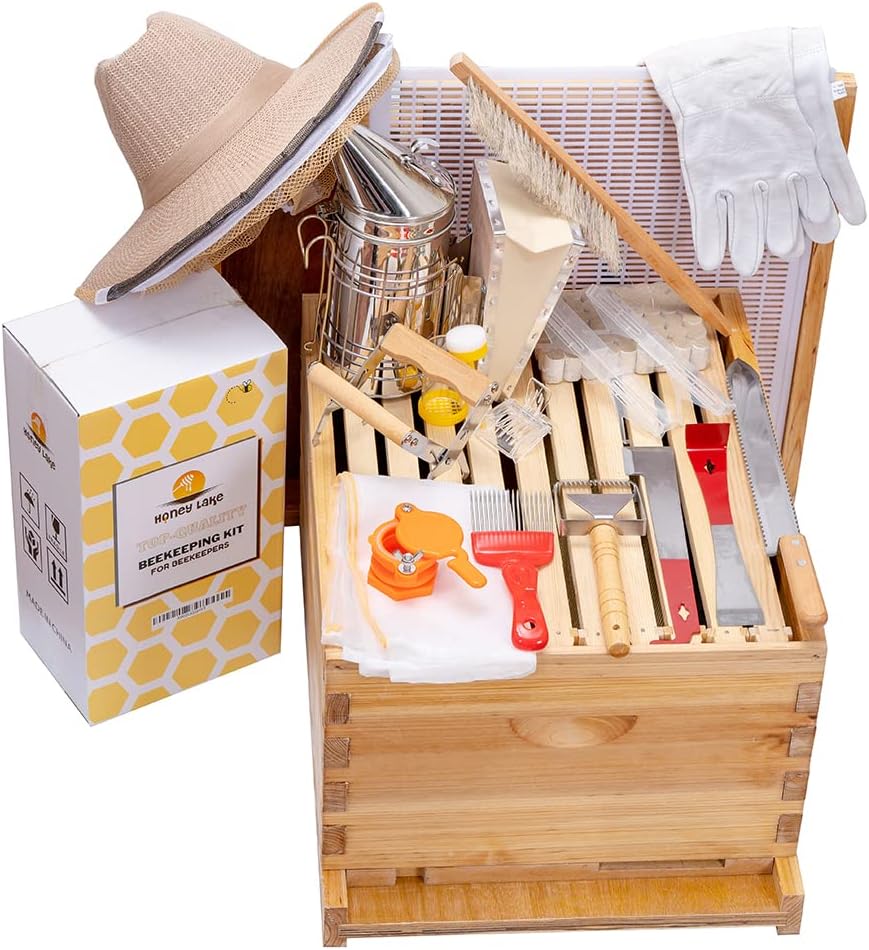
A beginner beekeeping starter kit includes a wooden hive box, frames, foundation, a lid, entrance reducer, and often a smoker and hive tool. It's the most economical way to get started because buying these items separately costs more and risks incompatibility between pieces. Make sure the kit is sized for your region (8-frame or 10-frame boxes vary by location) before ordering.
How Much Space Beekeeping Actually Requires
You need far less room than you’d expect. A single hive takes up about 4 square feet of ground space—roughly the footprint of a large trash can. It should sit on level ground, ideally facing southeast so morning sun warms the entrance. Bees need good air circulation and some afternoon shade in hot climates, so avoid placing the hive against a wall or in dense shade.
Your neighbors matter more than your space does. Check local zoning laws first; some cities ban beekeeping entirely, others require permits or minimum lot sizes. Even where it’s legal, a hive 30 feet or more from property lines reduces complaints. Bees forage up to 3 miles away, so they won’t bother neighbors’ yards—they’re too busy working flowers. Still, a friendly conversation with nearby residents before you start helps prevent misunderstandings.
A small yard works fine. You don’t need a large garden or orchard; bees will find flowers throughout the neighborhood. If you have space for a vegetable garden or a few flowering shrubs, that’s a bonus, but it’s not required. Urban and suburban beekeepers succeed regularly.
Your First Season, Month by Month
Spring (April–May): Install your package of bees or nucleus colony (a small starter hive) as soon as local beekeepers recommend—timing varies by region. Bees will immediately begin drawing comb and the queen will start laying eggs. Feed them sugar water for the first month; they need it to build comb. Resist opening the hive frequently; let them work undisturbed for at least three weeks.
Early Summer (June–July): Start inspecting every 7–10 days to check for disease, ensure the queen is laying, and confirm the colony is growing. Add a second box (called a super) when the first box is about 75% full of comb. This gives the colony room to expand and store honey. Continue feeding if nectar flow is slow in your area.
Late Summer (August): Stop adding boxes and stop feeding. The colony should be strong and preparing for winter. Reduce the hive entrance slightly to help bees defend against robber bees and wasps. Begin planning for winter—research your region’s requirements.
Fall (September–October): Do a final inspection to confirm the colony has enough food stores (roughly 60–80 pounds of honey or sugar stores for winter). Monitor for Varroa mites and treat if counts exceed recommended thresholds. Wrap the hive if you live in a cold climate. Reduce the entrance further.
Winter (November–March): Leave the hive alone. Bees cluster together for warmth and live off stored honey. Don’t open it. Provide ventilation (a small gap at the top) to prevent moisture buildup. In early spring, check that the hive isn’t empty and add sugar water if stores look dangerously low.
Common Beginner Fears (and What’s Actually Risky)
Fear: Bees will attack my family. Reality: Honeybees are defensive, not aggressive. They sting only when threatened—usually when the hive is opened or they’re crushed. Wearing a veil and moving slowly prevents most stings. Africanized bees (rare in most of North America) are genuinely more defensive, but your local beekeeper association will tell you if they’re in your area.
Fear: I’ll get stung constantly. Reality: Most beekeepers get stung a few times per year, often by accident (stepping on a bee). Protective gear and calm handling make stings rare. A sting is painful but not dangerous unless you’re allergic.
Fear: The hive will swarm and disappear. Reality: Swarming is normal bee behavior, not a failure. It happens when a colony gets too crowded and the bees decide to split. You can prevent it by adding space in time and managing the hive properly. If they do swarm, they usually cluster nearby for a few hours before flying off.
Actual risks: The real dangers are disease (especially foulbrood, which kills colonies), mites, and starvation in winter. These are manageable with basic knowledge and monitoring. Join a local beekeeping club—experienced beekeepers catch problems early.