Best Beekeeping Suits for Kids
A kids beekeeping suit is a full-body protective garment designed to cover a child from neck to ankles, keeping stings away from skin. Whether your child needs one depends entirely on what you’re doing: if you’re visiting an apiary once or doing casual observation from a distance, you probably don’t. But if your child is going to help with hive inspections, work alongside you regularly, or you want them to feel confident and protected during hands-on beekeeping, a proper suit makes a real difference in their comfort and safety.
Best Overall Kids’ Suit
The best kids beekeeping suit balances protection, comfort, and durability without being so heavy or restrictive that a child refuses to wear it. Look for a suit made from thick, tightly woven cotton or cotton-polyester blend—at least 10 ounces per square yard. The fabric should be light colored (white or tan) so you can spot bees crawling on it, and it needs elastic cuffs at the wrists and ankles to seal gaps. A full-length zipper down the front makes it easy for kids to put on and take off without help, which matters when they’re excited or nervous. The suit should have a hood with a protective veil attached—this is non-negotiable for face and neck coverage. Pockets are genuinely useful for holding a hive tool, though not essential. Avoid suits with excessive padding or insulation; kids overheat quickly, and an overheated child is a distracted child. A good kids suit weighs around 1 to 1.5 pounds and costs between $40 and $80. Durability matters: you want something that survives repeated washing and occasional snags on equipment without tearing easily.
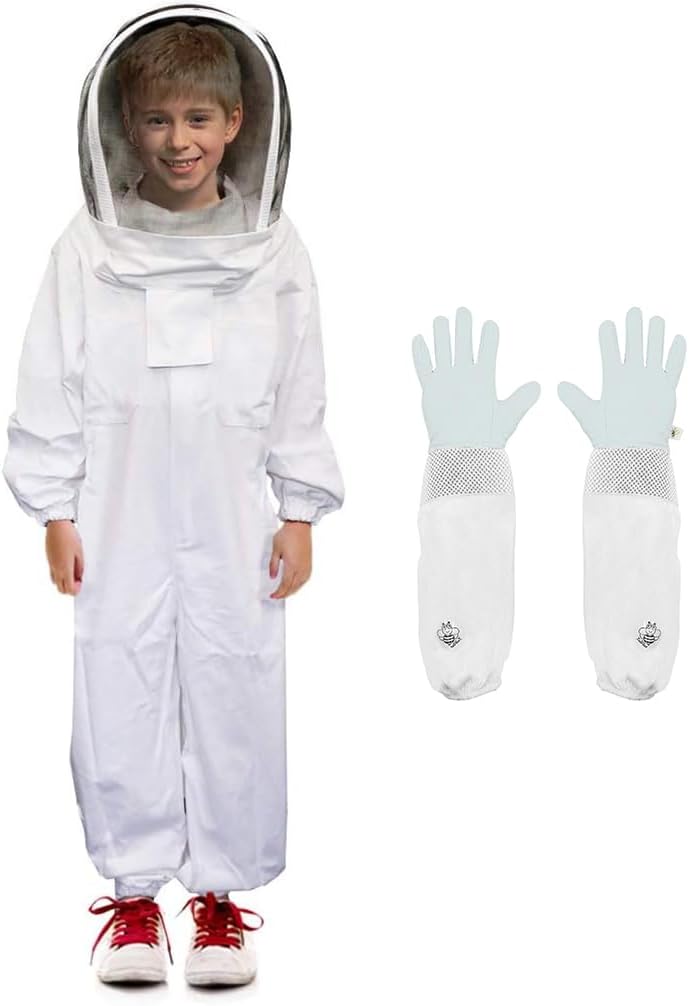
A kids beekeeping suit in sizes for ages 4–14 typically features a full-body cotton-blend design with an attached veil, elastic cuffs, and a front zipper, offering reliable protection for young beekeepers learning alongside experienced keepers or conducting their first hive inspections.
Sizing Guide by Age
Kids grow fast, so measure before you buy. A suit should fit snugly enough that bees can’t crawl between the fabric and skin, but loose enough that your child can move their arms and bend comfortably. Most manufacturers size by age range (ages 4–6, 7–10, 11–14), but these are rough guidelines—a tall 8-year-old might need a size meant for 10-year-olds. Check the inseam and sleeve length carefully; the suit should reach the wrists and ankles without bunching. If your child is between sizes, size up slightly rather than down—a loose suit is safer than one that pulls tight and creates gaps. Measure your child’s chest, waist, and inseam, then compare to the manufacturer’s chart before ordering. Keep in mind that kids beekeeping suits are meant to be worn over regular clothes, so factor in a long-sleeved shirt and long pants underneath. If you’re buying for multiple children or expect your child to grow into beekeeping over a few years, consider whether the suit will still fit in 18 months; if not, plan to replace it. Some families buy a slightly oversized suit and use it with adjustable suspenders or a belt to take in the waist.
Extra Safety Features to Look For
Beyond the basic suit, certain features genuinely improve safety and confidence. A reinforced veil with a rigid brim keeps the mesh away from your child’s face, which is crucial—a veil touching the skin can let a bee sting through. Look for suits with a zippered or snap-closure hood rather than one that ties; zippers are faster to secure and less likely to come undone during movement. Double-stitched seams, especially at the cuffs and ankles, resist tearing and prevent small gaps. Some kids beekeeping suits include a built-in elastic waistband that keeps the suit from sagging as your child bends over a hive. Reflective trim or bright contrasting panels aren’t strictly necessary but help you spot your child in tall grass or near the apiary. Ventilation matters too—look for suits with mesh panels under the arms or along the sides to prevent overheating without sacrificing protection. A suit with a pocket sized for a hive tool keeps your child’s hands free and reduces fumbling. Finally, choose a suit that’s machine-washable; kids will get dirt, grass stains, and propolis on it, and you’ll want to clean it regularly without hand-washing every time.
What to Skip for a One-Time Family Visit
If your child is just tagging along to watch bees from a safe distance—say, sitting on a blanket 20 feet from the hive—a full kids beekeeping suit is overkill. Light-colored, long-sleeved clothing and long pants, plus a wide-brimmed hat with mosquito netting draped over it, provide adequate protection for observation. You don’t need a specialized suit for a single visit to an apiary or a demonstration at a fair. However, if your child shows genuine interest and you think beekeeping might become a regular activity, invest in a proper suit then; it’s worth the cost for repeated use. Don’t buy an adult suit and try to make it work for a child—the proportions are all wrong, and gaps will form at the neck, wrists, and ankles where bees can enter. Similarly, avoid cheap suits made from thin, loosely woven fabric; they offer little protection and fall apart after a few washes. If you’re unsure whether your child will stick with beekeeping, rent a suit from a local beekeeping club or apiary before buying one.