Flow Hive Review: Is It Worth It?
The Flow Hive is a popular plastic honey-extraction system that lets you harvest honey without opening the hive or using an extractor. Before you buy one, you should know what it actually does, what it doesn’t do, and whether a beginner really needs it.
How Flow Hive Harvesting Actually Works
A Flow Hive uses a two-part frame design: a plastic outer casing and an inner “flow frame” that contains hexagonal channels. Bees build comb on top of these frames as normal. When honey is capped (sealed with wax), you insert a key into the side of the frame, which slides the inner part slightly, breaking the comb cells open internally. You then attach a tube and let gravity drain the honey into a collection container below—no centrifuge, no uncapping knife, no spinning.
The process takes 15–30 minutes per frame, and you can harvest while the hive is still closed. This is genuinely less disruptive than traditional extraction, which requires you to open the hive, remove frames, uncap cells, spin them in an extractor, and return them. On a practical level, Flow Hive removes a lot of the physical labor and mess from honey harvest.
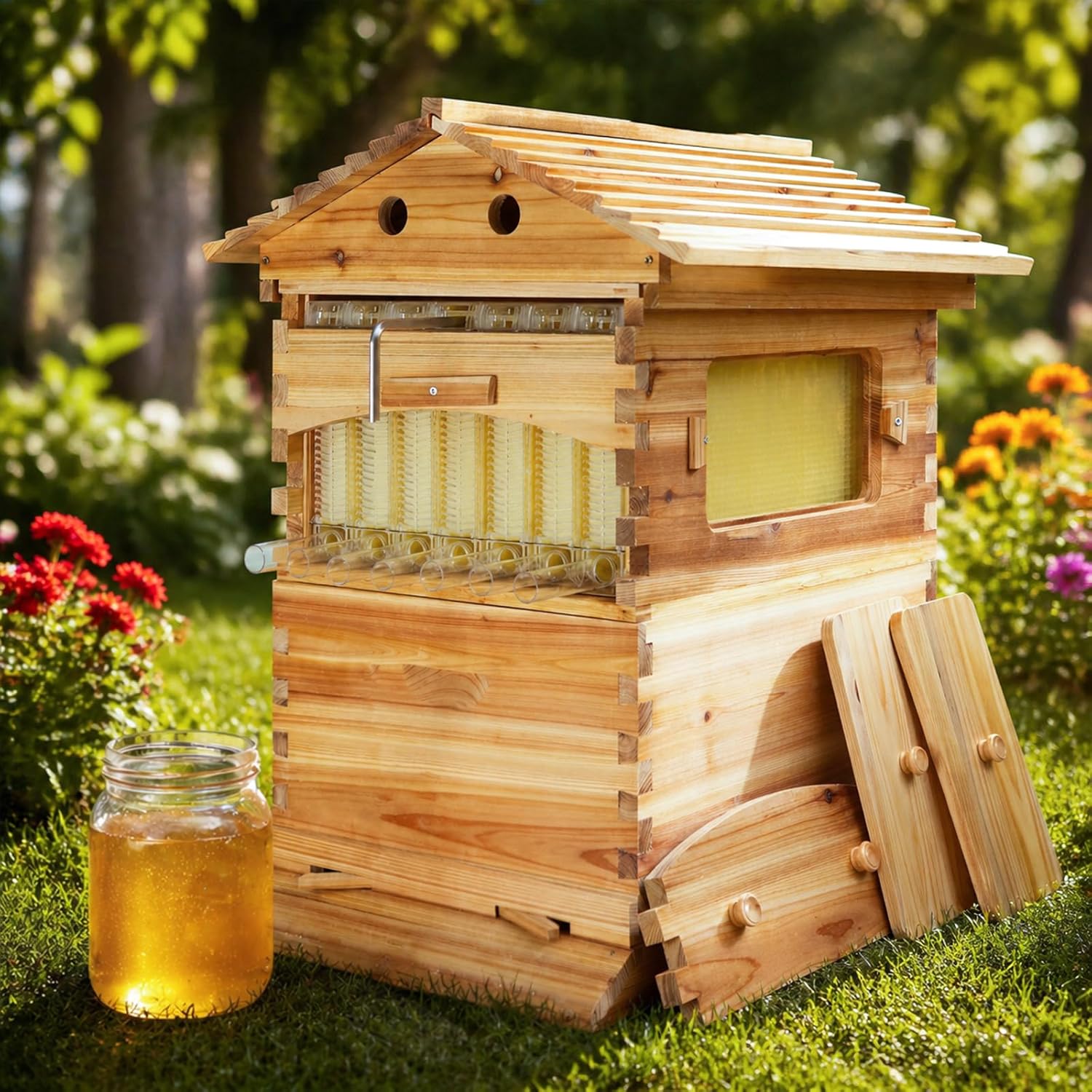
The Flow Hive system itself comes as a full brood box or honey super kit with frames, collection box, and tap. If you do decide to try it, buy the honey super (smaller box) first rather than the full brood box—it's cheaper, lets you test the system without replacing your whole setup, and is easier to manage as a beginner.
Where Flow Hive Outperforms Traditional Extraction
If you have mobility issues, arthritis, or simply limited upper-body strength, Flow Hive is genuinely easier. Spinning a full extractor is hard work; draining honey through a tube is not. You also avoid the sticky cleanup—no extractor to wash, no frames to handle, less honey splashed around your workspace.
Flow Hive also produces less hive disturbance. Because you don’t crack open the brood box (the lower section of the hive where the queen lays eggs and the colony raises young bees), you’re not exposing the colony to temperature changes or robber bees (bees from other colonies that will invade and steal honey if given the opportunity) as much. For some beekeepers, this translates to calmer hives during harvest. You also get a clearer view of how much honey is actually in each frame before you harvest, since you can see the capping from outside.
From a time perspective, if you’re harvesting 5–10 frames, Flow Hive is faster than setting up an extractor, processing frames, and cleaning everything afterward.
Where Flow Hive Falls Short
Flow Hive frames are expensive—typically $25–40 per frame versus $3–8 for traditional wooden frames. A standard deep box needs 10 frames, so you’re looking at $250–400 just for frames. Traditional equipment (extractor, uncapping tools) costs money too, but it’s a one-time purchase that works for decades.
The plastic frames are also less durable than wood. They can crack in cold weather, warp, or degrade over time. If a frame fails mid-harvest, you can’t easily repair it like you can with wood.
Cleaning is another hidden issue. Honey residue gets stuck in the channels, and you need to disassemble and soak the frames regularly. It’s not a quick rinse. If you harvest multiple times per season, this becomes tedious. There’s also a learning curve—the first harvest often produces leaks or incomplete drains if you don’t angle the frame correctly or if the honey is too thick.
Finally, Flow Hive doesn’t work well with very thick honey or crystallized honey, and it doesn’t help with brood frame extraction if you ever need to split a hive (divide one colony into two separate hives, typically to prevent swarming or to grow your operation) or manage brood.
Who Flow Hive Is Actually For
A beginner should not rush to buy Flow Hive. Start with a traditional Langstroth setup, harvest once or twice the old-fashioned way, and then decide if the labor is genuinely a problem for you. Most hobbyists find traditional extraction manageable, and you’ll learn more about your hive by opening it.
Flow Hive makes sense if: you’re over 60 and have joint pain, you’re harvesting more than 20 frames per season, you have limited workspace for an extractor, or you’re certain you’ll keep bees long-term and want to minimize hive stress. It also appeals to people who want a lower-mess, more “hands-off” approach and can afford the premium.
If you’re on a tight budget, have a small operation (one or two hives), or are still learning, buy a used extractor and traditional frames instead.