How to Label Honey for Legal Sale
If you’re selling honey directly to customers—whether at farmers markets, online, or from your home—you need proper labels. If you’re only giving honey away or selling to a licensed processor who will repackage it, you can skip this. But if your honey leaves your property with a price tag, labeling is not optional; it’s a legal requirement that varies by state and can result in fines if done wrong.
Required Label Information by State
Federal law (FDA) requires that labels be truthful and not misleading, and sets some baseline expectations — product name, net weight, and ingredients among them — but exactly what must appear on a honey label, and in what format, is set at the state level and varies by state, and sometimes by county. Rather than guess, contact your state’s department of agriculture or weights and measures office directly and ask specifically what’s required; many publish a checklist. If you sell across state lines, follow the strictest rule you encounter. Keep a copy of whatever your state tells you, printed and filed — if you’re ever inspected, you’ll need to show you made a good-faith effort to comply with the actual current rule, not a general guide.
Net Weight and Nutrition Labeling Rules
Net weight is the amount of honey inside, not including the jar. It must be stated in both US customary units (ounces) and metric (grams or milliliters). A 16 oz jar should read “16 oz (454 g)” or similar. Weigh a sample of jars from each batch to verify the stated weight is accurate; don’t guess.
Nutrition facts panels are required by the FDA only if you make a health claim (like “raw” or “unfiltered” or “antioxidant-rich”). If your label simply says “honey” with no special claims, you can skip the nutrition panel. However, some states or retailers may ask for it anyway, so it’s worth having one ready. Honey’s nutrition is fairly standard: roughly 64 calories, 17 grams of carbohydrates, and trace minerals per tablespoon. You can find the USDA’s official values online or use a nutrition label generator tool. Print it small if space is tight—it doesn’t need to dominate the label.
Common Labeling Mistakes That Trigger Fines
The most frequent violation is vague or missing origin information. “Local honey” is not specific enough; you need your actual name and address. Inspectors want to know exactly where to find you if there’s a problem. Leaving this blank or writing only a city name can result in a warning or fine.
Overstating purity is another trap. If your label says “100% pure honey” but you’ve added anything—even a trace of water or spices—that’s false advertising. Stick to what’s actually in the jar. If you’ve blended honey from multiple sources, you can still call it honey, but don’t claim it’s from a single origin.
Incorrect net weight is surprisingly common. Handwriting weights on labels after filling creates discrepancies; the weight drifts as honey settles or evaporates. Print weights on labels before filling, then spot-check jars to confirm accuracy. If you’re consistently short, adjust your filling process.
Finally, avoid unsubstantiated health claims. You cannot say honey “boosts immunity” or “cures allergies” without FDA approval. “Raw,” “unfiltered,” and “natural” are generally safe if true, but check your state’s specific rules—some restrict these terms.
Labeling Differences for Raw vs. Processed Honey
Raw honey generally means it hasn’t been heated above a certain temperature, though whether your state legally defines that threshold — and whether it requires you to declare “raw” on the label — varies, so check directly rather than assume. Processed honey may be heated, filtered, or both.
If you sell raw honey, most states want that word on the label. Some also require a disclaimer that raw honey may contain pollen or botulism spores (though botulism in honey is vanishingly rare). Check your state’s exact wording; don’t improvise.
Processed honey doesn’t need a special label, but if you filter or heat it, you can’t call it raw. Be honest about your method. Some beekeepers heat honey only to make it pourable; that’s still processing. If you do nothing to the honey except jar it, you can call it raw (assuming your state allows the term).
Recommended Products
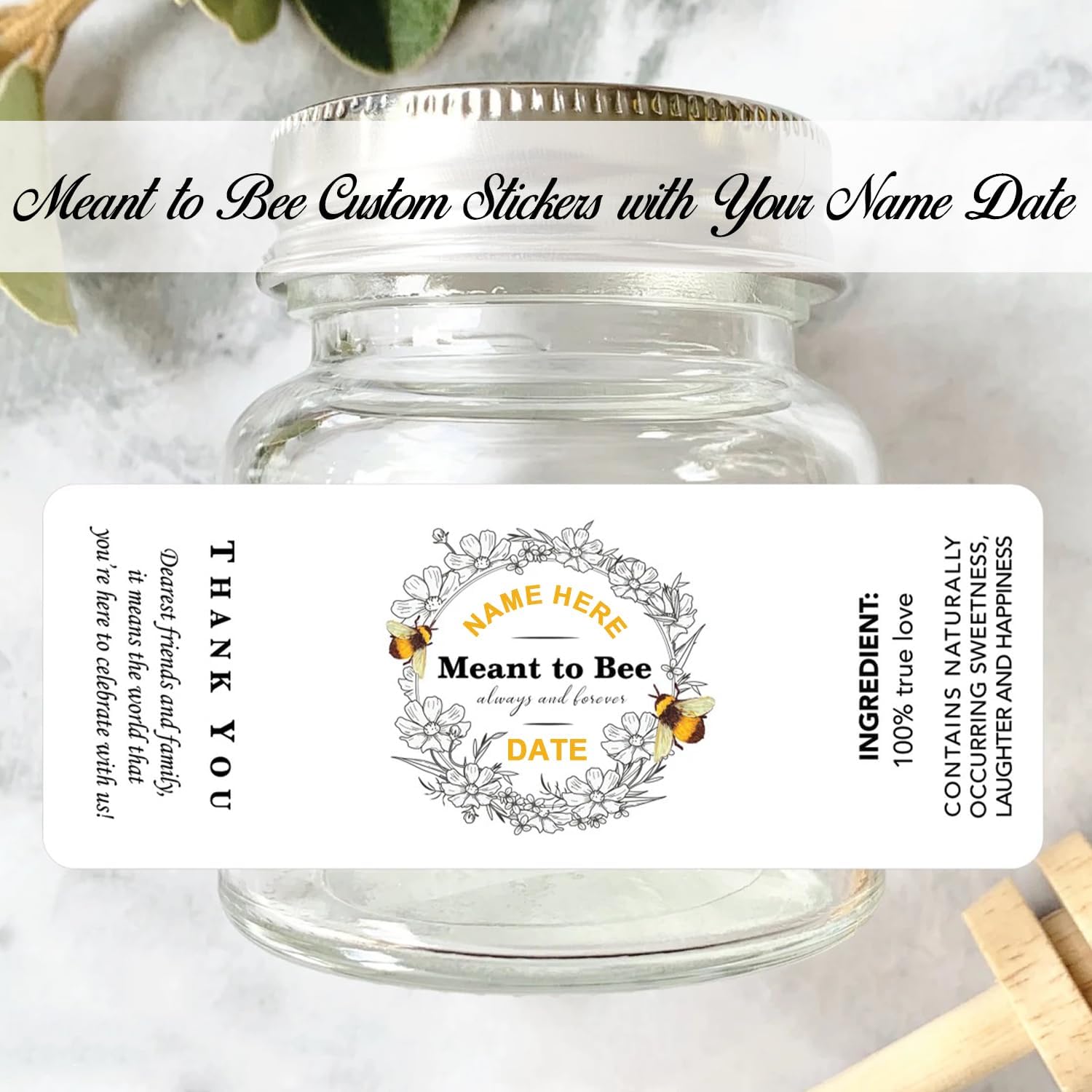
Custom honey jar labels waterproof are designed to stick to glass and plastic jars without peeling or smudging, even in humid conditions or if the jar gets wet. You can print your own design at home or upload artwork to an online printer, then order pre-cut labels in bulk—usually 100 to 500 at a time. This option gives you full control over design and text, though it requires a bit of upfront work to get the layout right.
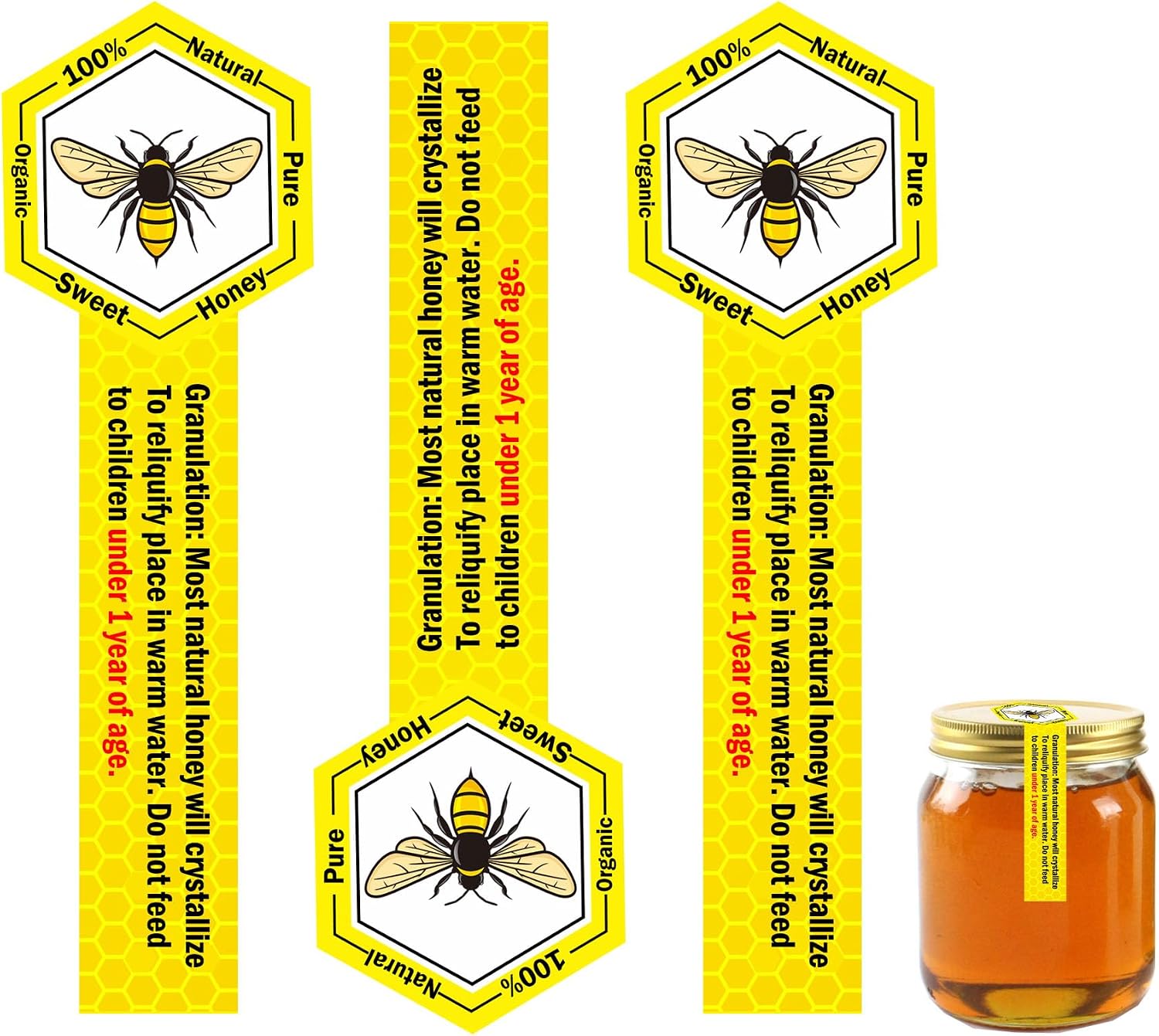
A honey jar label printer is a dedicated thermal or inkjet device that prints labels on-demand, often pre-sized for standard jars. This works well if you're printing small batches or want to change designs frequently without reordering stock, but the per-label cost is higher than bulk-printed custom honey jar labels waterproof and the equipment itself is an extra investment.