Screened vs. Solid Bottom Board Comparison
A screened bottom board and a solid bottom board are the two main floor styles for standard Langstroth hives. The choice between them affects ventilation, pest management, and how well your hive handles different seasons. For most beginners, this decision matters less than you might think—but understanding the trade-offs will help you pick what works for your setup.
Ventilation Differences
A screened bottom board has mesh (usually 1/8-inch hardware cloth) across the entire floor, allowing air to flow freely underneath the hive. This creates natural ventilation that helps regulate humidity and temperature year-round. In summer, this airflow reduces heat buildup inside the hive, which can prevent the bees from having to work as hard to cool things down. The trade-off is that screened bottom boards offer less insulation in winter—cold air flows through more easily, forcing the colony to burn more stores to stay warm.
A solid bottom board is a flat wooden floor with no openings. It traps warmth inside the hive during cold months, which is why many beekeepers in northern climates prefer it. Solid boards also reduce drafts that can stress a cluster of bees huddled together for warmth. The downside is reduced airflow in summer and higher humidity inside the hive, which can promote mold and fungal issues, especially in damp climates or poorly ventilated hives.
Most beginners won’t notice a huge difference in their first year or two. If you live in a cold climate, a solid bottom board is simpler and more forgiving. If you’re in a warm or humid region, screened offers a small advantage. Many successful beekeepers use both types at different times of year—screened in summer, solid in winter—though this adds complexity you don’t need starting out.
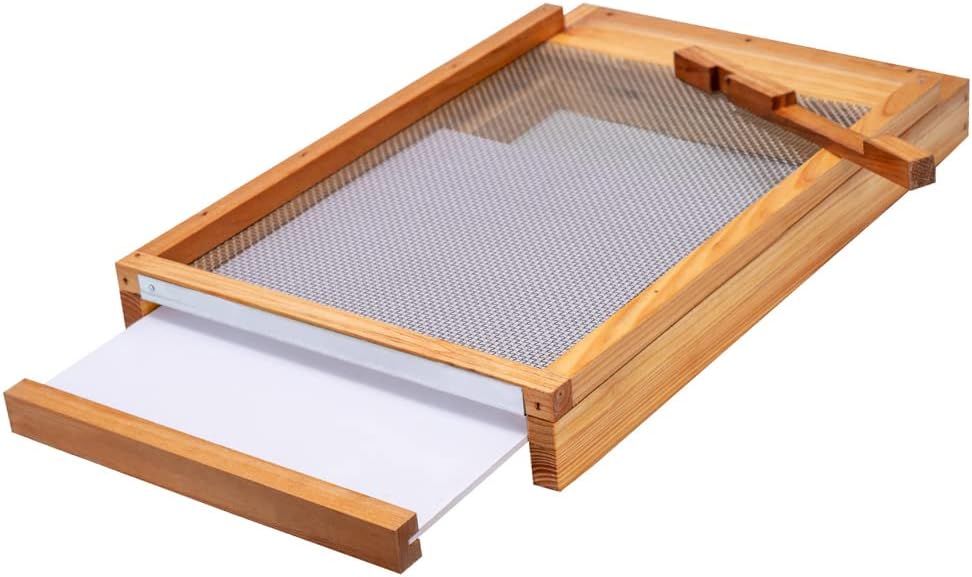
A screened bottom board from a reputable supplier like Mann Lake or Dadant gives you the mite-monitoring advantage and works well in warm or moderate climates. The mesh is durable and the frame is usually solid wood, so it lasts several seasons.
A solid bottom board is the traditional choice and works reliably in cold climates or if you want maximum simplicity. It's often the default that comes with beginner hive kits and requires almost no maintenance beyond occasional cleaning.
Mite-Monitoring Benefits
A screened bottom board makes it easy to monitor for varroa mites, a serious pest that weakens hives. Mites fall through the mesh onto a sticky board or tray placed underneath, giving you a rough count of infestation levels without opening the hive. This is called a “natural mite drop.” You can slide a piece of white paper or a sticky trap under the screen, leave it for a few days, and see how many mites have fallen. This takes 30 seconds and gives you useful information.
A solid bottom board doesn’t let mites fall through, so you can’t use this monitoring method. You’d have to open the hive, pull frames, and inspect bees directly to check for mites—which is more time-consuming and more disruptive to the colony.
That said, don’t oversell the screened board as a mite solution. Counting mites tells you there’s a problem, but it doesn’t treat it. You still need to decide on a treatment strategy (whether that’s chemical, organic, or integrated pest management). A screened bottom board is a useful diagnostic tool, not a cure. For a beginner, the ability to peek without opening the hive is genuinely handy, but it’s not a reason to choose screened if your climate or other factors point to solid.
Climate Suitability
In cold climates (winters below freezing for weeks or months), a solid bottom board is usually the better choice. Heat loss through a screened floor can stress a small or medium colony, especially in a harsh winter. Solid boards are standard in Canada, Alaska, and northern U.S. states for this reason.
In warm or hot climates (summers regularly above 85°F), a screened bottom board helps prevent overheating and reduces moisture buildup. It’s common in the South and Southwest. If your region is humid year-round, screened also helps prevent mold on comb and frames.
In mild climates with moderate winters and summers, either works fine. Many beekeepers in temperate zones use screened boards and don’t report problems. The real issue is extremes: very cold winters or very hot, humid summers.
One practical note: if you live somewhere with seasonal variation, you can use a solid board in winter and switch to screened in spring. This requires buying both and managing the swap, which is extra work. Most beginners stick with one type for the whole year and do fine.
Side-by-Side Comparison Table
| Feature | Screened Bottom Board | Solid Bottom Board |
|---|---|---|
| Summer cooling | Better airflow | Traps heat |
| Winter warmth | Less insulation | Better insulation |
| Mite monitoring | Easy (natural drop) | Not possible |
| Humidity control | Dries out hive | Retains moisture |
| Best for cold climates | No | Yes |
| Best for hot/humid climates | Yes | No |
| Maintenance | Check/clean screen regularly | Minimal |
| Cost | Slightly higher | Slightly lower |
| Beginner-friendly | Yes | Yes |