Best Beginner Beekeeping Suits
A beekeeping suit protects your skin from stings and helps you work calmly around your hives. Honestly, you don’t need an expensive suit to start—a basic one works fine, and many beekeepers add to their gear over time. This guide covers what actually matters in a beginner suit and which options give you real value.
Best Overall Beginner Suit
The Humble Bee 410 is a popular option for people starting out. It’s a full-body suit with a veil attached, made from thick cotton that resists stings reasonably well. The suit zips up the front and has elastic cuffs at the wrists and ankles to keep bees out. Most importantly, it fits true to size and doesn’t restrict movement when you’re bending into a hive box.
The veil is the critical part here—it keeps bees away from your face and neck, where a sting is most alarming. The Humble Bee 410’s veil is roomy enough that it won’t touch your face even if you move around, and the mesh is fine enough that bees can’t slip through. You get pockets for tools and a reasonable amount of durability for the price. It’s not fancy, but it does the job for someone learning the basics.
Best Budget Beginner Suit
If you want to spend less upfront, a basic unvented suit without a veil—paired with a separate veil and gloves—costs noticeably less than a full kit. These simpler suits are often cotton or a cotton blend and work fine for calm hives. You’ll need to buy a veil separately (usually $15–30) and beekeeping gloves ($10–20), but your total outlay is still lower.
The trade-off is that you’re buying separate pieces instead of one integrated system, so you need to make sure they fit together well. Sleeves need to cover the gap between your glove cuff and suit cuff. A veil needs to attach securely to a hat or hood so it doesn’t shift when you’re working. If you’re comfortable doing that assembly and you’re on a tight budget, this approach works. Just make sure any suit you buy has at least a basic hood or hat attachment point for the veil—don’t try to work without one.
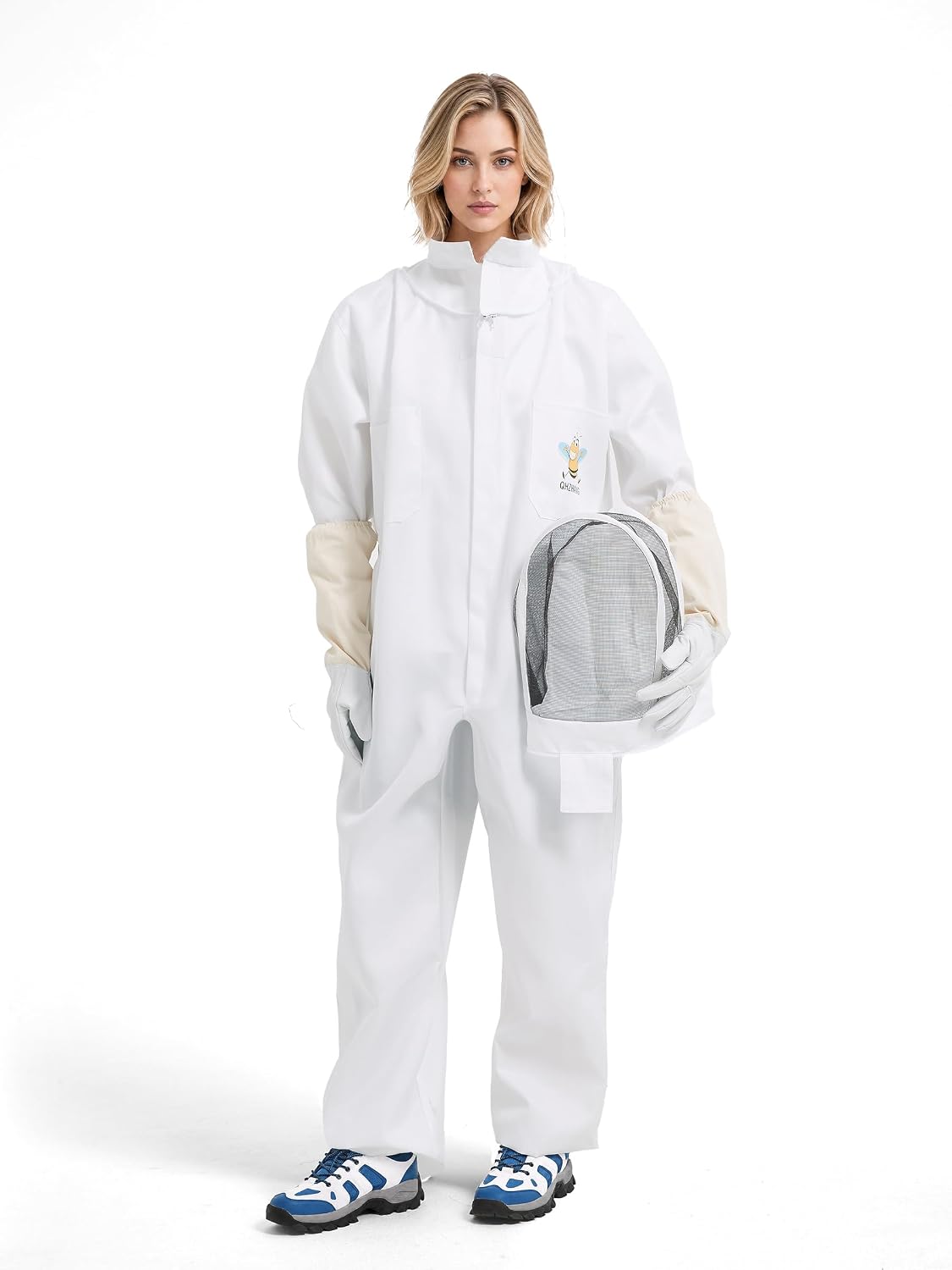
The Humble Bee 410 is a full-body cotton suit with an integrated veil, front zip, and elastic cuffs that seal at the wrists and ankles. It fits most people well, has good durability, and includes tool pockets—a solid all-in-one choice for beginners who want one reliable suit to start with.
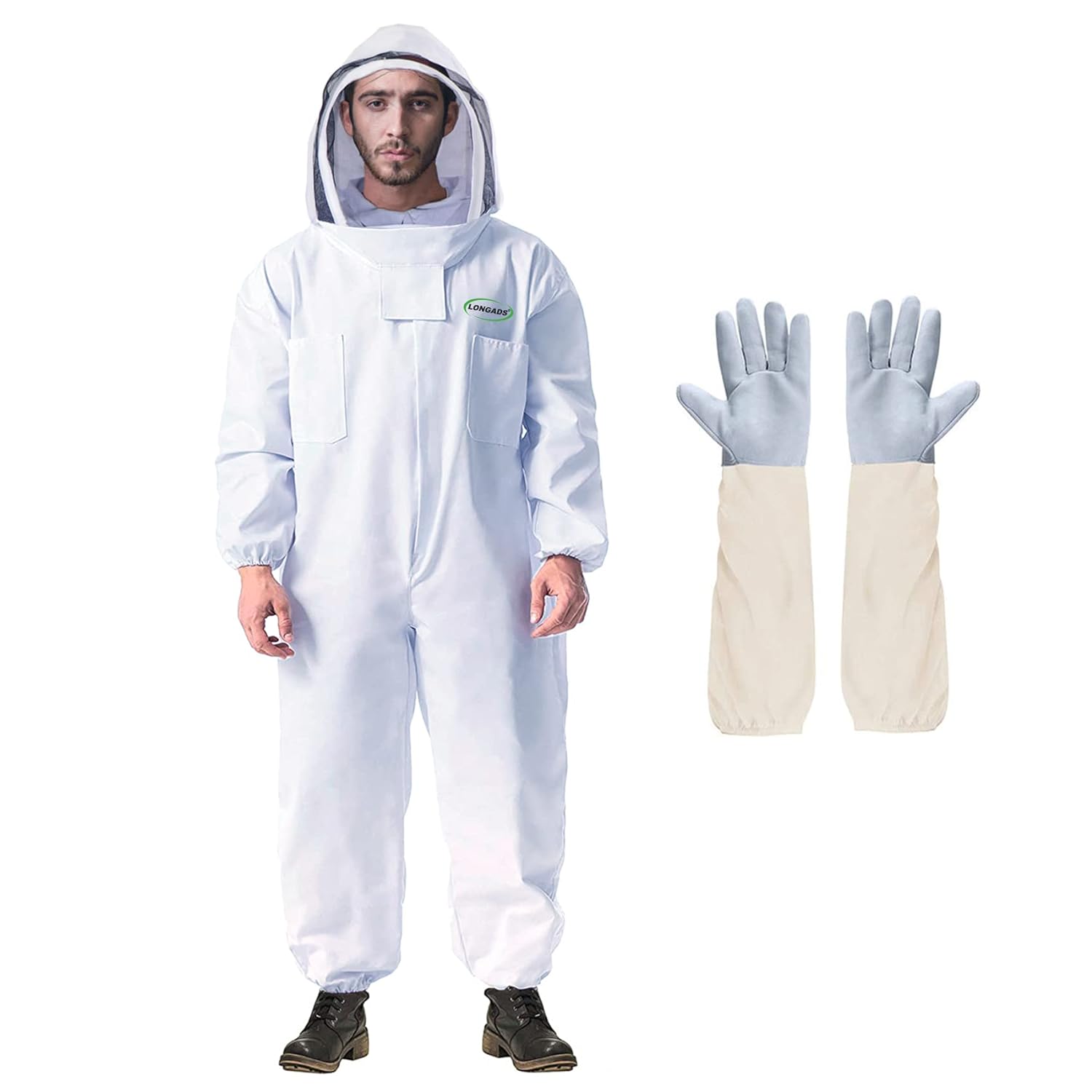
A basic cotton unvented suit paired with a separate veil and gloves costs less upfront and works well if you're budget-conscious and willing to assemble the pieces yourself. Make sure the veil attaches securely to a hood or hat and that your glove cuffs overlap the suit cuffs to close any gaps.
Best Suit for Nervous First-Timers
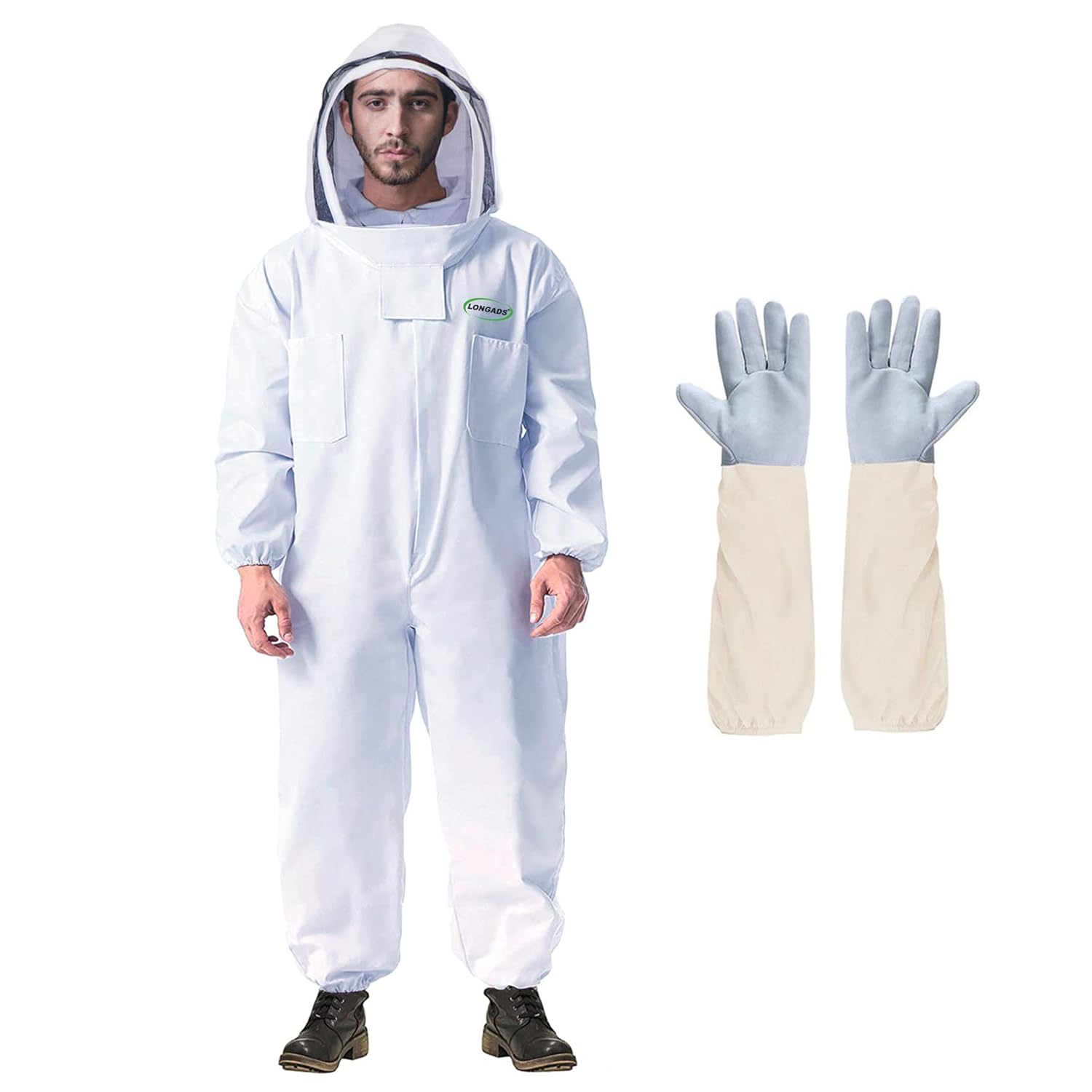
A double-zipper veil design seals more securely at the neck, which matters if you’re anxious about a gap letting a bee through on your first few inspections.
If the idea of bees crawling on you is genuinely stressful, a vented suit (also called a ventilated suit) is worth the extra cost. These have tiny mesh panels that let air flow through while keeping bees out. You stay cooler, which means you’re less likely to panic and move suddenly—and that calmness matters more than any other single factor when you’re learning.
Vented suits are heavier and more expensive than standard cotton suits, but they’re also more forgiving if your technique isn’t perfect yet. A loose cuff or a gap at the ankle is less likely to let a bee in. The mesh also gives you better visibility through the veil in some models. If you’re someone who gets anxious easily or you live somewhere hot, this is a reasonable upgrade. Just know that you’re paying partly for peace of mind, and that’s okay—staying calm around your bees is genuinely important.
What to Check Before Your First Wear
Before you put on your suit for the first time, try it on at home and check the fit. Sleeves should reach your wrists without bunching, and the suit should be loose enough that you can bend and reach without strain. Check that the veil attaches securely and doesn’t sag into your face. Put on the gloves you plan to use and make sure the suit cuff overlaps the glove cuff by at least an inch.
Walk around your house in the full suit for 10 minutes to see how it feels. You’ll be moving slowly and deliberately around your hives, but you should be able to bend down and reach overhead without the suit riding up or gaping. If you’re uncomfortable in any position, size up or adjust your setup before you visit your hives. Also check that all zippers work smoothly—a stuck zipper in a suit is frustrating and potentially unsafe. Finally, wash your suit before wearing it near bees; new fabric can smell chemical-like and may agitate them.