Beekeeping for Small Yards
If you have a small urban or suburban lot of roughly 2,000–5,000 square feet, you can still keep bees—but you’ll need to plan carefully. Small yards demand more attention to placement, neighbor relations, and hive type than larger properties. This guide walks you through what actually works in tight spaces.
Minimum Realistic Yard Size
You can keep bees on a lot as small as 2,000–3,000 square feet. The bees themselves don’t need much space; a single hive occupies only about 4 square feet of ground. The real constraint is your neighbors and local regulations.
Setback requirements — the minimum distance a hive must be from a property line — vary widely by location. Some areas require only a few feet; others require 50 feet or more. Before buying anything, check your local zoning ordinances and HOA rules if you have one. A few phone calls to your city or county planning office will save you months of frustration.
If your lot is smaller than 2,000 square feet or your setback requirements eat up most of your usable space, beekeeping may not be practical for you right now. That’s okay—consider waiting until you have more room, or explore urban beekeeping programs in your area that sometimes have different rules.
Hive Placement and Flight Path Planning
Place your hive where bees won’t fly directly over neighbor yards or patios. Bees fly in a straight line from the entrance to forage, so orient the hive entrance away from shared spaces. If possible, point it toward your own garden or a fence line.
Elevation matters. Raising a hive on a stand makes bees climb higher faster, lifting their flight path above head level sooner. This simple step reduces perceived bee traffic in small yards and makes neighbors less anxious.
Morning sun warms the hive and gets foragers out early. Afternoon shade keeps the hive cooler in summer. Aim for 6–8 hours of direct sun, with shade during the hottest part of the day if you’re in a hot climate. Avoid low-lying areas where water pools in rain; hives need drainage.
Wind matters too. A gentle breeze helps with ventilation, but strong wind stresses bees and makes them defensive. Plant a windbreak (shrubs, a fence, or existing trees) on the windward side if your yard is exposed.
Reducing Neighbor Complaints in Tight Spaces
Start by talking to neighbors before you install a hive. Explain what you’re doing, address fears directly (honeybees are gentle and rarely sting), and invite them to ask questions. Many complaints come from surprise and misunderstanding, not actual problems.
Keep your hive well-fed and watered. Hungry or thirsty bees roam farther and behave worse. Provide a water source within your yard—a shallow dish with pebbles or a small fountain—so bees don’t raid neighbors’ pools or pet bowls.
Maintain your hive. A neglected, diseased, or overcrowded hive produces defensive bees. Regular inspections, pest management, and timely splits (dividing one colony into two to prevent overcrowding) or requeening (replacing an old or aggressive queen with a new one) prevent most behavioral problems. A calm, productive hive is a good neighbor.
If a neighbor complains, take it seriously. Offer to move the hive if possible, or work with a local beekeeper mentor to troubleshoot the issue. Most complaints can be solved; ignoring them will not.
Best Hive Types for Small Footprints
A single 8-frame Langstroth hive is ideal for small yards. The Langstroth is the standard box-style hive used by most beekeepers, and the 8-frame version is compact (about 2 feet by 2 feet at the base), affordable, and easy to manage alone. Eight-frame equipment is lighter and less intimidating than ten-frame, which matters if you’re handling it solo.
Top-bar hives (long horizontal boxes where bees build comb hanging from removable bars along the top) and Warré hives (small stacked boxes managed with minimal intervention) are smaller still and look less industrial, which some neighbors prefer. They’re quieter to inspect and require less lifting. However, they’re harder to split or requeen, and they’re less forgiving of beginner mistakes. Stick with an 8-frame Langstroth unless you have specific reasons to go a different route.
Avoid keeping more than one hive in a small yard unless you have at least a half-acre. Two hives double the flight traffic, the noise, and the neighbor friction. Master one hive first.
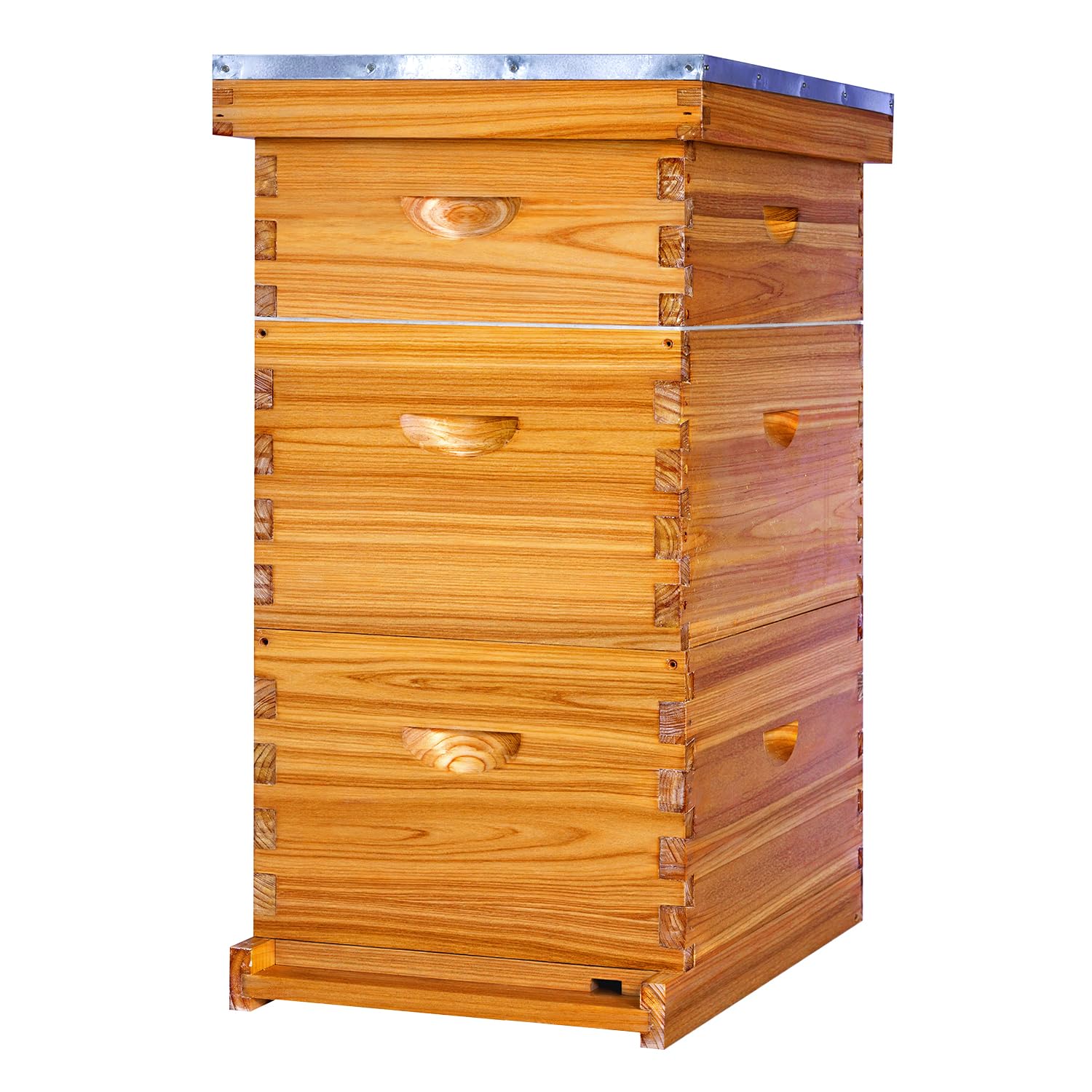
An 8 frame langstroth hive kit gives you a complete, ready-to-assemble hive with a brood box, frames, and a bottom board. It's the most practical choice for small yards because it's compact, affordable (usually $100–$150), and uses standard equipment you can replace or expand easily if you ever move to a larger property.