How to Manage a Two-Queen Hive
Two-queen hives let you grow more bees and honey from the same footprint, but they’re not necessary for beginners and add real complexity. Most new beekeepers should focus on running a single strong colony first. If you’ve kept bees for at least a season and want to experiment, a two-queen setup can work—but only if you’re willing to manage two separate populations and combine them before winter.
Why Beekeepers Run Two-Queen Systems
The main reason beekeepers use two queens is production. Two laying queens produce roughly twice as many bees as one, which means more foragers and potentially more honey. Some beekeepers also use two-queen hives as a way to increase population without maintaining two completely separate hives—you manage both queens in a stacked configuration and combine them when needed.
Two-queen systems also reduce swarming pressure. When a colony gets crowded, bees swarm to find new space. By splitting the population between two queens, each half stays less congested, so the urge to swarm drops. This keeps more bees in your hive instead of flying off into the neighborhood.
That said, the benefits come with real drawbacks. You’re managing two separate laying patterns, two separate food stores, and two separate temperaments. If one queen fails or is weak, you have to act quickly. Winter is also a problem: two queens in one hive will fight if they meet, so you must combine them back into one colony before cold weather. If you’re not ready for that work, don’t run two queens.
Setting Up the Divider
A two-queen system requires two full brood boxes — one for each queen’s colony — separated by a divider board. The divider is a solid or screened partition placed horizontally between the two boxes, preventing the colonies from mixing while allowing the overall hive to function as one unit. Each box needs its own entrance so the two colonies’ foragers can come and go independently.
Start with a strong, healthy colony that is covering at least eight frames with bees and has a proven queen. You can either introduce a second mated queen to the upper box, or split an existing colony and let one portion raise a new queen from an egg or cell. If you’re introducing a new queen, use a queen cage and follow standard introduction steps — release her after 3–5 days once the colony accepts her scent.
Each box needs its own entrance. The lower box uses the standard bottom entrance. The upper box needs a separate entrance cut or drilled into that box on the opposite side of the hive from the lower entrance, so foragers from each colony don’t collide. Keep both entrances small enough to prevent robbing but large enough for foragers to move freely. Mark them with different colors — red and blue, or yellow and white — so you can tell them apart at a glance.
The divider board itself must be solid and fit snugly between the two boxes. Any gaps let bees drift between sides or allow queens to find each other. Commercial hive divider boards are made for standard box dimensions and fit reliably; if you build your own, use 3/4-inch plywood or solid wood with no cracks.
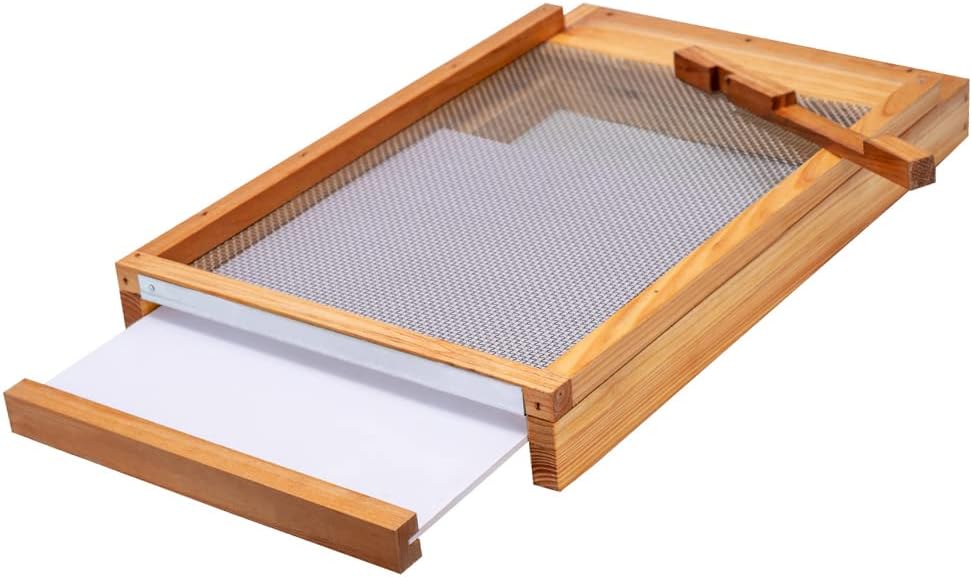
A hive divider board is the essential tool for running two queens in one box. It's a solid wooden partition cut to fit standard deep frames and creates two separate chambers with their own entrances. You can buy a ready-made divider or build one from 3/4-inch plywood if you're handy with tools.
Managing Resources Between Queens
Once both colonies are established, they’ll consume stores at different rates depending on their size and brood pattern. Check both sides every 7–10 days. The stronger colony will build comb and lay brood faster; the weaker one might lag behind.
Feed both colonies equally if either is short on stores. Use a top feeder (a wooden box that sits on top of the hive) or entrance feeders, and make sure each colony gets its share. If one colony is clearly outpacing the other, you can move a frame of capped honey from the strong side to the weak side — this gives the weaker queen’s colony a boost without starving the stronger one.
Watch for disease or pest problems in both colonies separately. If one shows signs of varroa mites, American foulbrood, or nosema (a fungal gut disease), treat that colony only. Don’t move frames between the two colonies once they’re established, because you’ll spread problems across the divider.
By late summer, both colonies should be reasonably balanced in size. If one queen is clearly failing or dead, you’ll need to decide: combine both colonies under the remaining queen, or requeen the weak side. Don’t let a two-queen hive limp into fall with one weak population.
Combining Down to One Queen for Winter
This is non-negotiable. Two queens cannot winter together in the same hive. They will fight and kill each other, leaving your colony queenless and doomed. Start combining in late August or early September, before the first hard frost.
Choose which queen to keep. Usually, you’ll keep the stronger, more productive queen and remove the other. Remove the weaker queen by finding her on her side of the hive and caging or killing her humanely.
After removing one queen, immediately inspect the now-queenless colony for emergency queen cells — bees can begin raising a new queen within 24 hours of losing one. Find and remove all queen cells before combining the two colonies. Once you are confident no queen cells remain, remove the divider board and merge the two colonies. They will combine peacefully because only one queen is present.
Once combined, you’ll have one large, well-provisioned colony for winter. Winter stores requirements vary by climate — check with your local beekeeping association or extension service for the recommended amount in your region, as colder climates typically require more. A combined two-queen colony usually winters well because of its size and food reserves.