Battery-Powered Bee Smoker Review
A battery-powered bee smoker does the same job as a traditional smoker—it produces cool smoke to calm bees during hive inspections—but runs on rechargeable batteries instead of requiring you to light and maintain a fire. Before you buy one, understand that it’s a convenience upgrade, not a necessity. Most beekeepers work successfully with a traditional smoker for years.
How It Compares to a Traditional Smoker
A traditional smoker is a metal box with a bellows attached. You fill it with fuel (wood shavings, pine needles, or cardboard), light it, and pump the bellows to push smoke into the hive. An electric bee smoker replaces the bellows with a battery-powered fan that does the pumping for you. You still load fuel into a chamber, but instead of manual effort, you press a button or switch to trigger smoke.
The core difference is effort and consistency. A traditional smoker demands attention—you have to keep the fire alive, remember to pump regularly, and adjust your rhythm based on how calm the bees seem. An electric bee smoker delivers steady, hands-free smoke as long as the battery lasts. You’re not fumbling with a bellows while holding a frame or managing bees. That said, both produce the same calming effect on bees. The smoke itself is identical.
Cost matters too. A decent traditional smoker costs $20–$50. An electric bee smoker typically runs $80–$150, depending on the model and battery capacity.
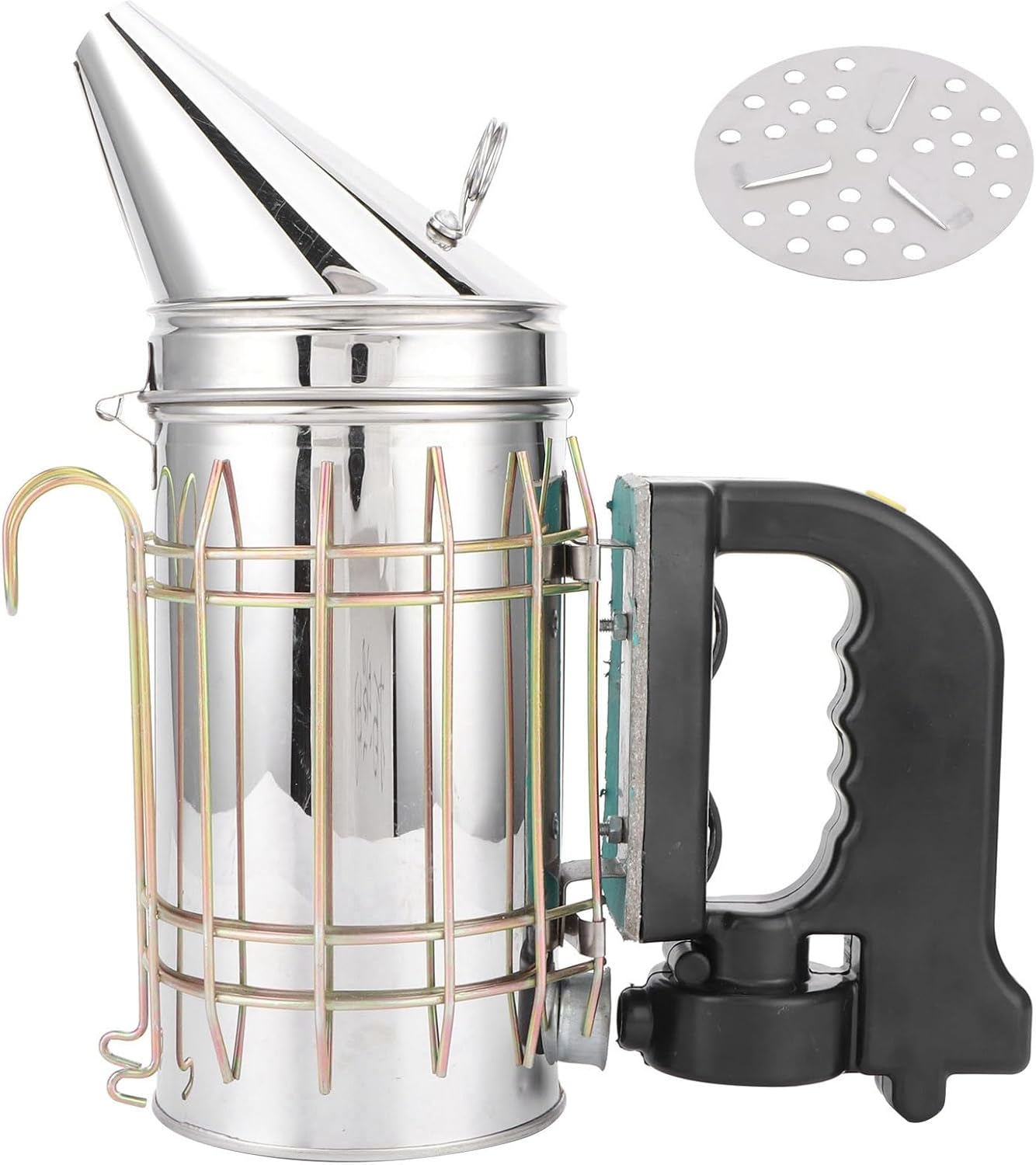
The electric bee smoker is a battery-powered alternative to hand-pumped smokers, typically featuring a rechargeable battery, a small fan unit, and a fuel chamber that works with standard smoker fuel. Models vary in battery life and charging method, so compare runtime and whether USB charging or a proprietary charger fits your workflow before buying.
Where It Performs Well
An electric bee smoker shines during long inspections or when you’re working multiple hives back-to-back. If you’re opening hives for 30+ minutes, continuous one-handed smoke delivery reduces fatigue and keeps your other hand free to handle frames safely. This is genuinely useful if you have arthritis, limited hand strength, or simply prefer not to pump a bellows repeatedly.
The consistency is also a real advantage. You get steady smoke output without thinking about it. There’s no risk of the fire dying mid-inspection or producing weak smoke because you stopped pumping. For nervous beekeepers or those working with particularly defensive colonies, that steady calm can make the job less stressful.
Battery life varies by model, but most electric bee smokers run 45 minutes to 2+ hours on a single charge—enough for a typical inspection or two. Recharging takes a few hours, usually via USB or a standard charger. If you only inspect hives once or twice a week, battery life is rarely a practical problem.
Where It Falls Short
An electric bee smoker still needs fuel and still needs to stay lit. You’re not eliminating the core task of loading and igniting the smoker; you’re just automating one part of it. If your fuel goes out or burns down, the electric fan won’t help. You still need to know how to light and maintain a smoker fire.
The upfront cost is significant for a beginner. Spending $100+ on a convenience tool when a $30 traditional smoker works just as well is hard to justify unless you know you’ll use it regularly. Many hobbyists inspect hives infrequently enough that the extra cost never pays for itself in saved effort.
Durability is also less proven. Traditional smokers are simple metal boxes that last decades. Electric bee smokers are newer technology with batteries, fans, and electronics that can fail. Repair options and replacement parts are less standardized than for traditional smokers.
Who Should Consider One
An electric bee smoker makes sense if you inspect hives weekly or more often, manage multiple apiaries, or have physical limitations that make hand-pumping difficult. It’s also worth considering if you find the repetitive bellows motion annoying—some beekeepers simply prefer not to do it.
If you’re a beginner with one or two hives and inspect them occasionally, skip it. Buy a traditional smoker first, learn the basics, and revisit this decision after a season or two. You’ll know by then whether the convenience is worth the cost. Experienced beekeepers who’ve already invested in a traditional smoker and want to reduce inspection fatigue are the most likely to see real value.