Best Honey Extractors for 2 Frames
A 2-frame honey extractor is a hand-crank or electric drum that spins honey out of comb frames using centrifugal force. If you’re running one or two hives, this size can work—but you need to be honest about whether you actually need one at all, or whether a simple strainer and gravity will do the job better.
Best Overall 2-Frame Extractor
The 2-frame honey extractor manual is the workhorse choice for small-scale beekeepers. It’s a stainless steel drum with a hand crank, two baskets that hold frames vertically, and a gate at the bottom to drain honey into a bucket. The manual version costs between $150 and $250, and it works reliably without a motor or electrical components to fail. You’ll spend 5–10 minutes hand-cranking per batch, which is genuinely not bad for a hobbyist. The main advantage is durability: there’s almost nothing to break. The main drawback is effort—your arm will know you’ve extracted honey. For most beginners with one or two hives, this is the right balance of cost, reliability, and practicality. Stainless steel won’t rust or contaminate your honey, and the drum is easy to clean.
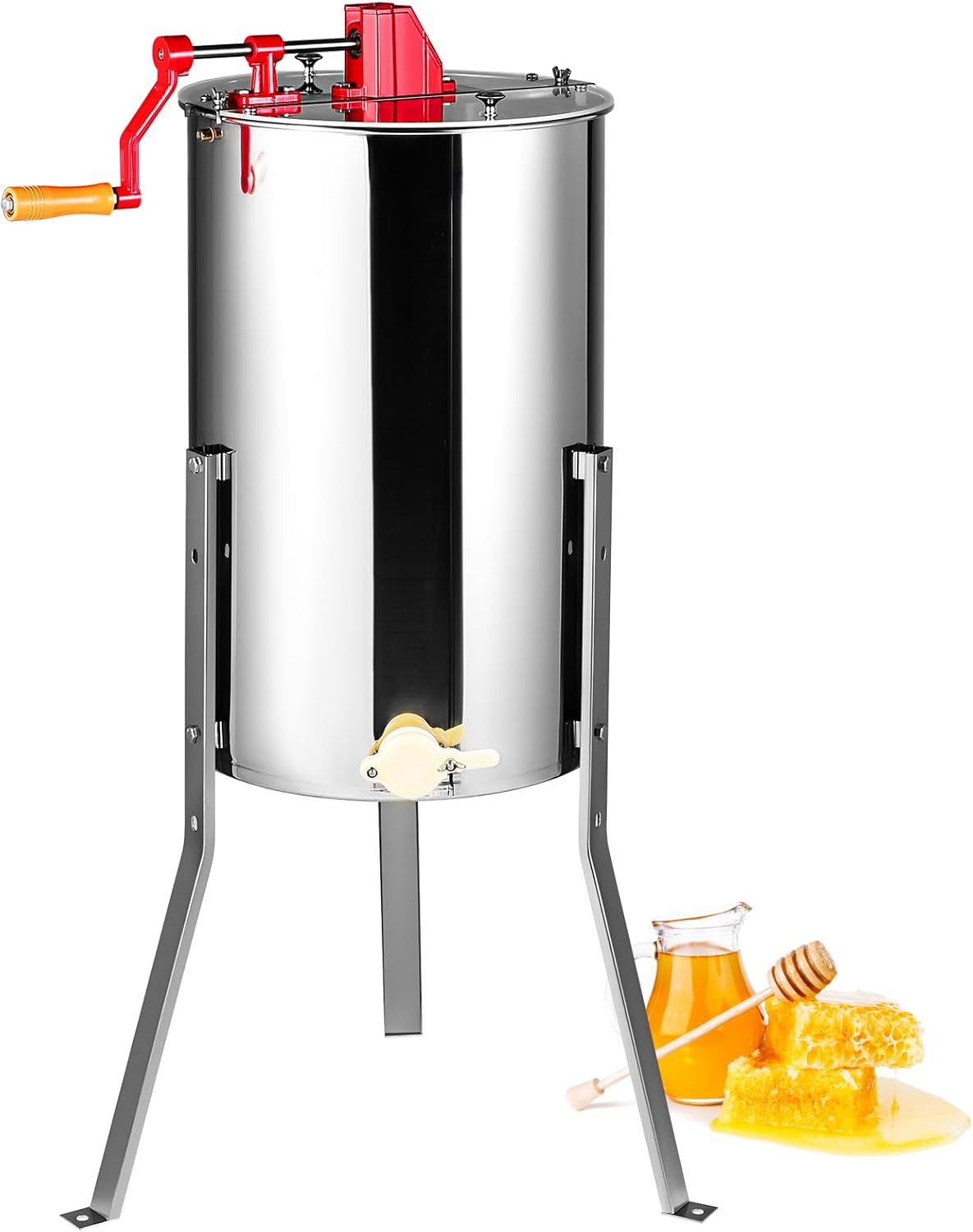
The 2-frame honey extractor manual is the standard recommendation for beginners. It's stainless steel, hand-cranked, holds two frames vertically, and costs $150–$250 depending on brand and where you buy it. Expect to spend 5–10 minutes per batch and to get clean, reliable extraction year after year with minimal maintenance.
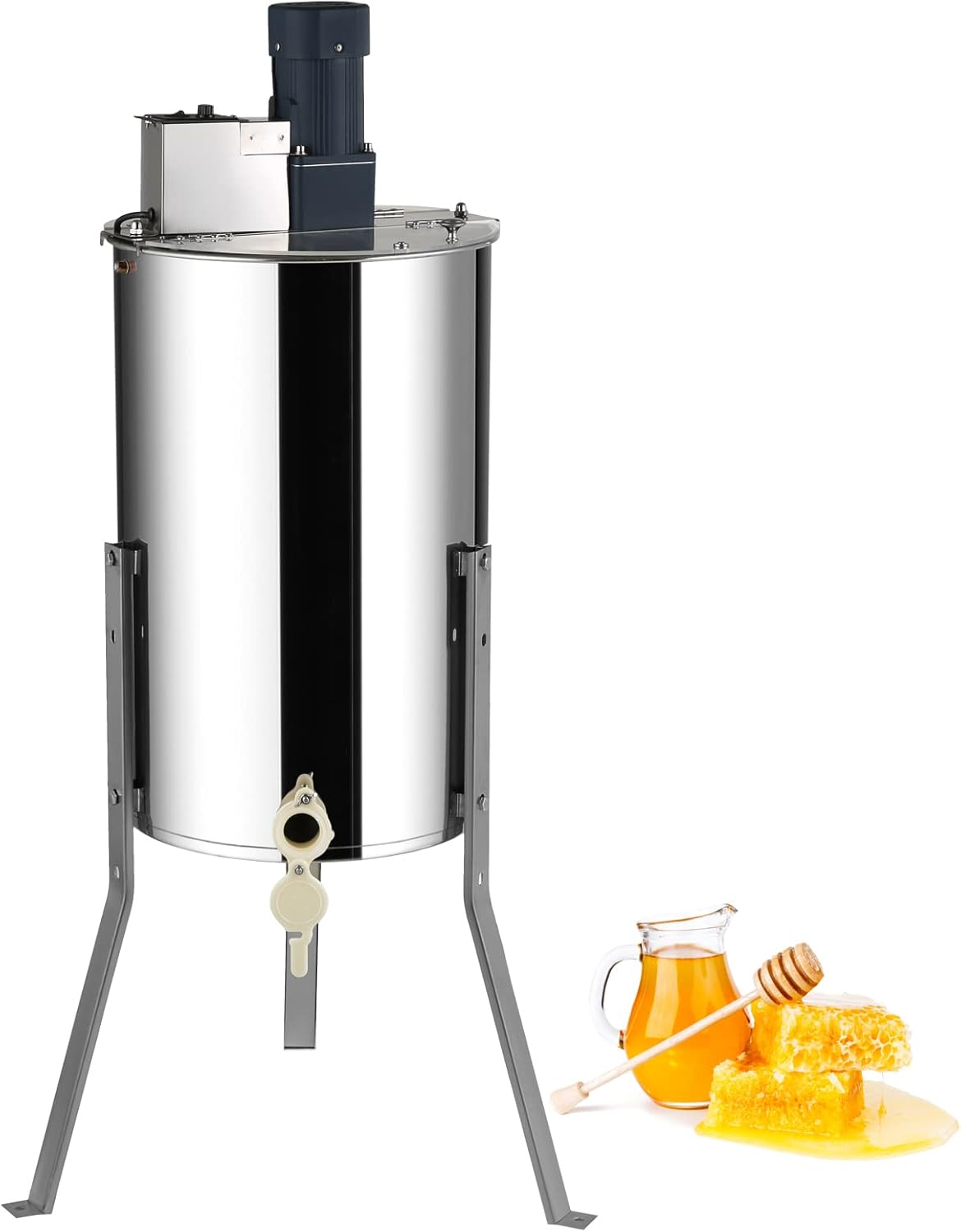
The 2-frame honey extractor electric removes the hand-crank labor by adding a small electric motor, usually running on 110V household current. It costs $300–$500 and is worth it only if you have three or more hives or are extracting multiple times per season; for one or two hives, the manual version does the job and takes up less counter space.
Best Budget Option
If you’re hesitant to spend $150 on a tool you might use once a year, the budget 2-frame honey extractor is worth considering. These run $80–$120 and are usually plastic or painted steel drums with the same basic design. They work, but expect some corners cut: plastic can warp if you use hot water to clean it, and cheaper metal may rust if not dried properly. The hand crank is often lighter and less comfortable on your hand during longer sessions. If you have just one hive and extract only once or twice annually, this is defensible. If you’re extracting from two hives or doing multiple batches in a season, spend the extra $100 for the stainless steel version—it’ll last years longer and feel less like a chore.
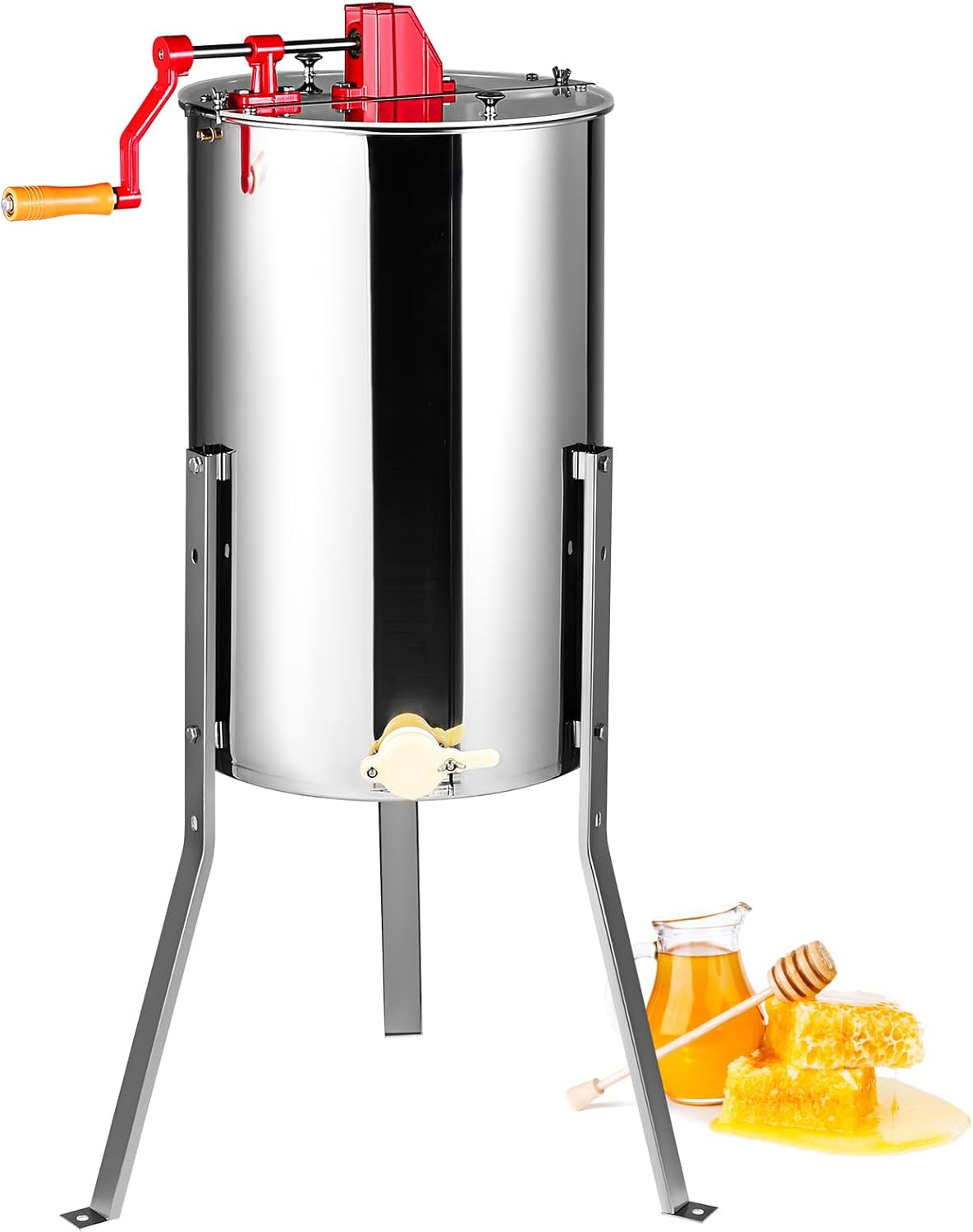
The budget 2-frame honey extractor is a plastic or painted-steel drum version priced $80–$120 and suitable only if you're extracting once or twice per year from a single hive. It works, but expect rust and warping over time; treat it as a temporary tool, not a long-term investment.
When 2 Frames Is Genuinely Enough
A 2-frame extractor makes sense if you’re running one or two hives and harvesting once per year. Honey yield per frame varies depending on frame size—a standard deep Langstroth frame of fully capped comb can yield roughly 5–8 pounds, while medium frames yield less. If your hives produce 30–40 pounds total per year, you’ll need only a few extraction sessions. The extractor also works fine if you’re harvesting uncapped or partially capped frames—you just spin them longer. Where it breaks down: if you have three or more hives, or if you’re harvesting multiple times per season (spring, summer, fall), you’ll spend your entire harvest period hand-cranking. Also, don’t buy an extractor if you only have one hive and plan to harvest just once. A simple fine-mesh strainer, cheesecloth, and gravity will extract honey just as well over a few days, costs $20, and takes up no storage space. Be honest about your real needs before spending money.
Upgrade Signs to Watch For
After your first or second harvest, you’ll know if you need to upgrade. If you’re hand-cranking for more than 20 minutes total and your forearm is sore, a 2-frame extractor isn’t keeping up with your operation—you should look at a 4-frame or larger model. If you have three hives and are extracting twice a year, you’re spending too much time on a single tool. If you’re storing the extractor in a shed and it’s rusting despite your best efforts, the cheaper plastic or painted-steel model isn’t holding up; invest in stainless steel next time. Conversely, if you extract once a year from one hive and the hand crank feels fine, you don’t need to upgrade. Many beekeepers keep the same 2-frame extractor for a decade. Upgrade only when the tool is genuinely slowing you down or failing, not because you think you should.