Winter Feeding Bees: Fondant vs. Syrup
When temperatures drop below 50°F, your bees can’t break cluster to reach liquid syrup, even if the feeder is full. (A “cluster” is the tight ball of bees that forms in cold weather — bees huddle together and vibrate their flight muscles to generate heat, and they move as a group rather than individually around the hive.) Winter feeding often means the difference between a colony that survives and one that starves. This guide compares the two main options: bee fondant and bee syrup, so you can decide which fits your situation.
Why Syrup Doesn’t Work in Cold Weather
Bee syrup is a liquid mixture of sugar and water that bees can drink and process quickly. It works beautifully in autumn when temperatures stay mild, but it fails once winter arrives. When the mercury drops, bees cluster tightly together for warmth and don’t venture to the edges of the hive where feeders usually sit. Even if they did, syrup freezes solid in cold weather, becoming useless. A hive can have a full feeder of bee syrup and still starve because the cluster simply cannot reach it.
Additionally, syrup that does get consumed in cold weather can ferment or crystallize inside the hive, creating more problems than it solves. High moisture from liquid syrup can also raise humidity inside the hive, which is harmful to a winter colony — bees tolerate cold far better than they tolerate damp. For these reasons, most beekeepers stop using bee syrup once nighttime temperatures are regularly falling below 50°F, regardless of the calendar date.
Bee syrup is a liquid sugar solution that works well in fall and early winter when temperatures allow bees to move around the hive. It's quick to make or buy, easy to deploy, and lets you feed bees at any time of year when the weather permits.
How Fondant Solves the Winter Problem
Bee fondant is a solid, putty-like cake of sugar that doesn’t freeze and doesn’t require bees to leave the cluster to eat. You place it directly above or within arm’s reach of the winter cluster, so starving bees can nibble it without breaking formation. The texture is dense enough that it won’t leak or ferment, and it stays stable through temperature swings. Bees can consume bee fondant at their own pace throughout winter without the risks that come with syrup.
It’s also less messy — there’s no liquid to spill inside the hive or attract robbing (when bees from other colonies detect an easy food source and invade your hive to steal it). The main trade-off is that bee fondant requires more planning; you need to place it before the cluster tightens up, and you can’t easily top it off like you can with a feeder. Some beekeepers make their own fondant from plain white granulated sugar, while others buy ready-made candy boards or commercial fondant — either works, as long as it contains no additives or artificial flavors.
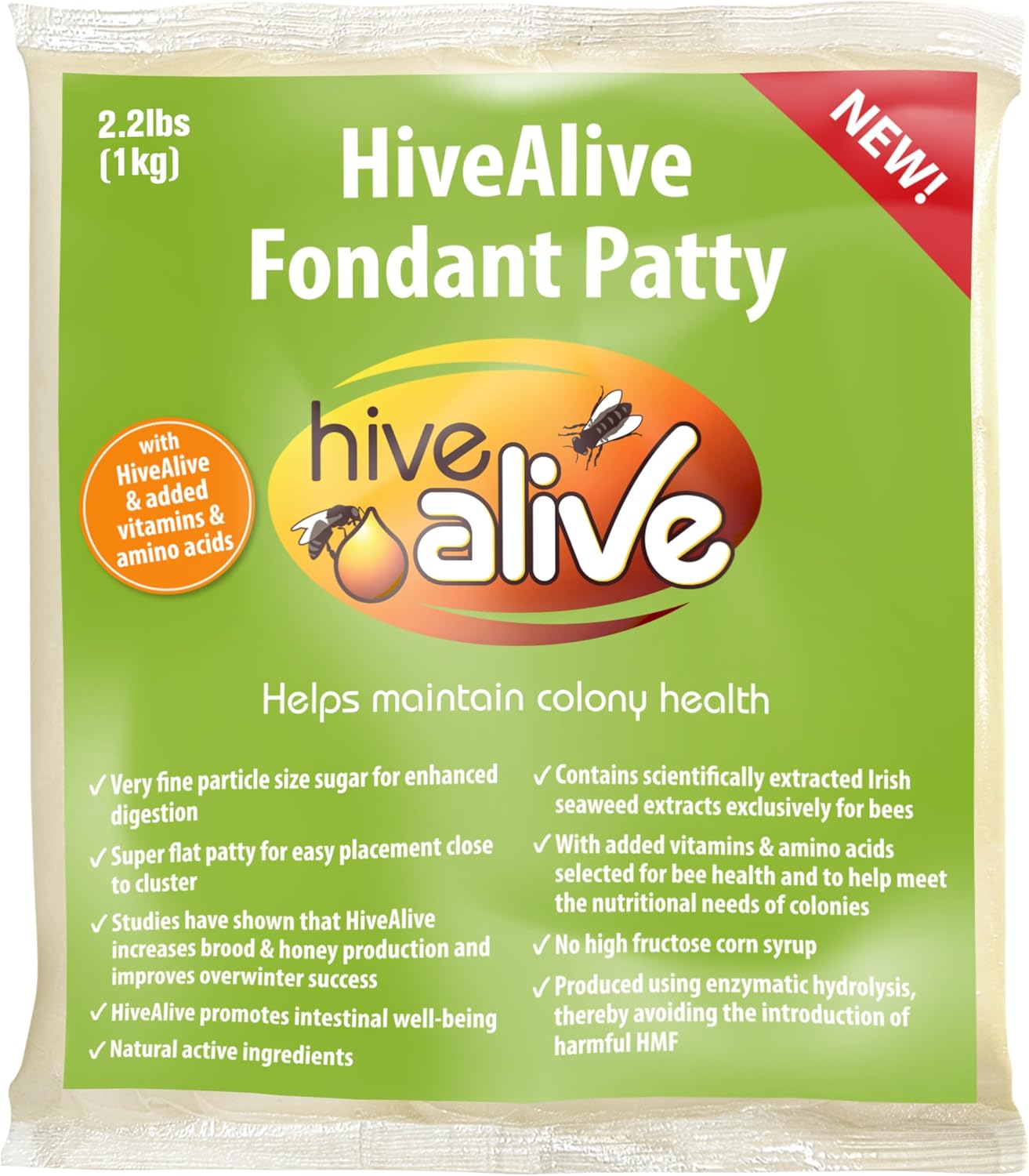
Bee fondant is a solid, shelf-stable cake made from sugar and water that you place directly above the winter cluster. It's inexpensive, keeps for years if stored dry, and eliminates the guesswork of whether bees can reach liquid food in cold weather.
Placement Differences Inside the Hive
Where you put your winter food matters enormously. Bee syrup, when used in fall, typically goes in an external feeder or a top feeder that hangs inside the hive — places bees can reach when they’re still moving around. Bee fondant, by contrast, goes directly above the cluster or sometimes wedged between frames where bees are already huddled. Many beekeepers place bee fondant on a board or piece of cardboard directly on top of the frames, right under the inner cover (a thin board with a small hole or notch that sits between the top box of frames and the outer roof, providing ventilation and an upper entrance), so bees moving upward as they consume stores naturally encounter it.
The key is proximity: the fondant must be close enough that bees can reach it without breaking cluster. If you need to add a small spacer rim or empty super above the top box to make room for a thick fondant cake, that’s perfectly acceptable — just make sure the extra space doesn’t create a large cold air pocket directly above the cluster. Bee syrup feeders, by contrast, sit outside the cluster, which is why they fail in winter. When in doubt, place fondant closer to the cluster rather than farther away.
When to Switch from Syrup to Fondant
Most beekeepers use bee syrup in late August through September, when it’s warm enough for bees to visit external feeders and when you’re trying to build up stores quickly. Once nighttime temperatures are regularly dipping below 50°F and you’re worried about starvation, it’s time to put bee fondant in place. The exact timing depends on your climate and how much honey your bees stored going into autumn — a colony with heavy, well-capped honey stores may not need supplemental feeding at all, so check your hive’s weight or peek at the top frames before deciding to feed.
Don’t wait until the deepest cold sets in; bees need time to find and start consuming fondant before the cluster locks down completely. Before opening the hive to place fondant in cold weather, choose the warmest part of the day and work quickly to minimize chilling the cluster. If you live in a mild climate where bees can still move around in January, bee syrup might work longer, but bee fondant is the safer choice once you’re uncertain about survival. When in doubt, fondant is the lower-risk option — it won’t ferment, won’t freeze, and won’t raise hive humidity.