Package Bees vs. Nuc vs. Swarm Comparison
When you’re ready to start your first hive, you have three main ways to get bees: package bees, a nuc (short for nucleus colony), or catching a swarm. Each has different costs, timelines, and failure rates, so understanding the trade-offs helps you pick what actually makes sense for your situation and budget.
Cost Comparison
Package bees are usually the cheapest option, typically running $120–$180 per package depending on your region and the supplier. You’re buying roughly 10,000 bees plus a queen in a screened box, and that’s it—no brood (developing bee larvae and eggs) or drawn comb included.
A nuc costs more upfront: expect $150–$250 for a small colony that already has brood, honey, and drawn comb on 4–5 frames. You’re paying for a head start, and that premium reflects the beekeeper’s work in raising and preparing it.
Swarms are free or nearly free if you catch them yourself, but you’ll need a trap or bait box ($30–$80) and patience. If you hire someone to catch and deliver a swarm, you might pay $50–$150 depending on location and difficulty.
Don’t forget: all three require a hive body, frames, and basic gear. Those costs are the same no matter which bee source you choose, so focus on the bee cost itself.
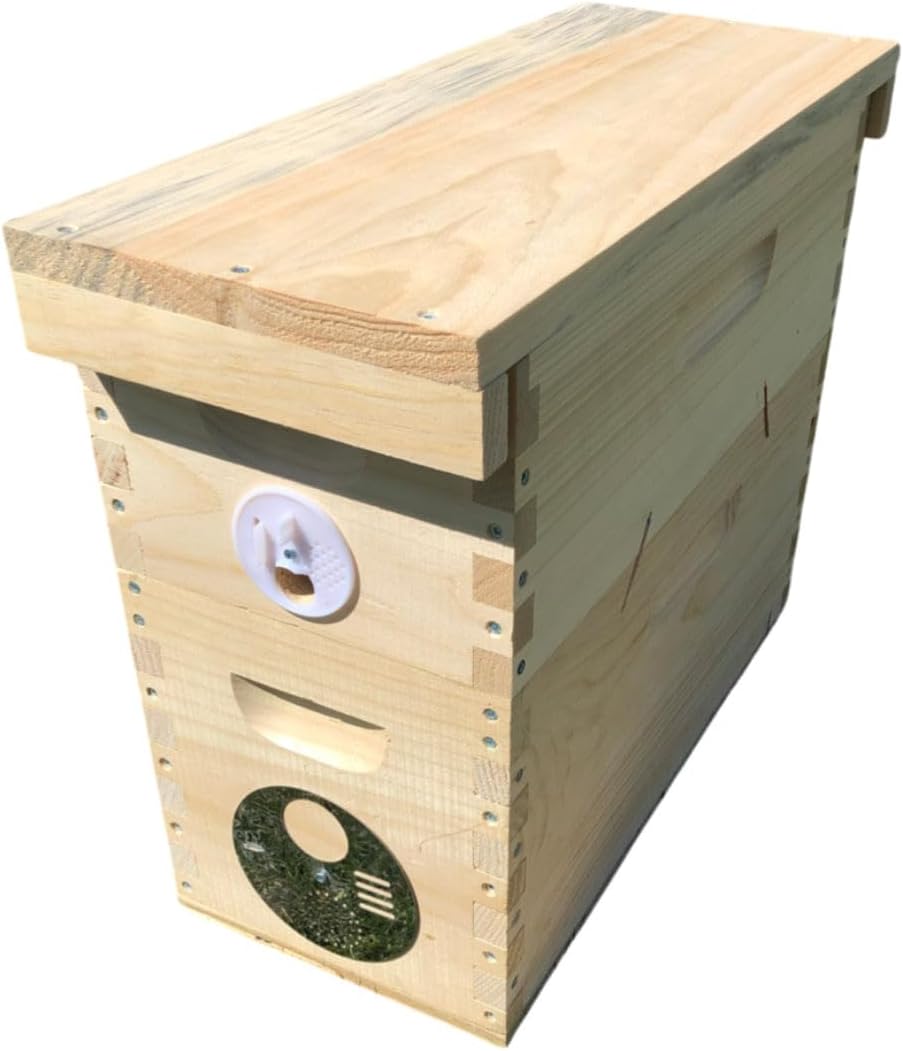
A ready-made swarm trap box saves you the DIY step — bait it with old comb or a lemongrass oil lure, set it up in spring, and check it weekly. If you catch one, you've gained a free colony and valuable experience.
Speed to Establishment
Package bees take the longest to get rolling. The queen needs time to be accepted by the workers (3–7 days), then she starts laying. You won’t see meaningful brood or honey stores for 4–6 weeks. Most beekeepers don’t see their first real honey surplus until the second year.
A nuc is already a functioning mini-colony, so it skips the acceptance phase. The queen is laying, there’s brood at various stages, and there are already honey and pollen stores. You can expect the nuc to fill a second box and start looking like a real colony within 4–8 weeks. Some nucs can produce surplus honey in their first year if conditions are right, though that’s not guaranteed.
Swarms are wild colonies that have already been living together, so they’re established and the queen is proven. They often build comb and lay brood faster than package bees. The catch: you don’t know the swarm’s history, genetics, or health status until you observe it over time.
Risk Level Comparison
Package bees have a moderate failure rate. Queens sometimes fail to be accepted, or the queen herself is poor quality. The bees have no existing food stores, so if a nectar dearth (a period when little or no nectar is available from flowering plants) hits right after installation, they can starve before drawing enough comb to store resources.
Nucs are lower risk because the colony is already functioning and has stores. The queen is proven (she’s been laying in the nuc for weeks). Nuc failures happen mainly because problems are caught earlier and the colony has a buffer of resources. The main risk is poor nuc quality from an irresponsible seller.
Swarms are unpredictable. You don’t know the queen’s age, the colony’s disease status, or whether it carries Varroa mites (a parasitic mite that feeds on bees and is one of the most serious threats to colony health) or other problems. Some swarms thrive; others fail within weeks. This option suits patient beekeepers willing to accept higher variance.
Side-by-Side Comparison Table
| Factor | Package Bees | Nuc | Swarm |
|---|---|---|---|
| Cost | $120–$180 | $150–$250 | Free–$150 |
| Setup time | 4–6 weeks to build | 2–4 weeks to expand | 1–3 weeks to settle |
| First-year honey | Unlikely | Possible | Possible |
| Queen age | Unknown | Known, proven | Unknown |
| Relative failure risk (year 1) | Moderate | Lower | Higher/variable |
| Best for | Budget-conscious starters | Faster results, lower risk | Patient, experimental beekeepers |