Beekeeping with Kids: A Safety Guide
Beekeeping with kids can work—and it’s genuinely rewarding—but it requires honesty about what children can safely handle. The good news is that bees aren’t aggressive by nature, and kids who learn respect for the hive often become careful, focused beekeepers. The hard part is that young children lack the impulse control and body awareness adults have, so supervision and realistic expectations matter more than gear.
What Age Is Actually Safe
The right age isn’t a single number—it’s about attention span and the ability to follow safety rules without constant reminders. An 8-year-old can stand nearby, watch, and learn. A 10-year-old can help with simple tasks like holding frames (the removable wooden panels inside the hive where bees build comb and raise young) with guidance. Teenagers can do most of what adults do, though you’ll still need to enforce calm behavior.
The real threshold isn’t age alone; it’s whether a child can stand still, follow directions the first time, and not panic if a bee lands on them. Some 7-year-olds have this. Some 12-year-olds don’t. Start by having kids observe from a distance—10 feet away—before they ever wear a suit. If they’re fidgety, loud, or scared, they’re not ready yet. That’s okay. Waiting a year or two makes the experience better for everyone.
Weather and time of day matter too. Inspect hives on calm, warm afternoons when bees are foraging and fewer are home. Never bring kids during a nectar dearth (a period when little or no nectar is available from flowers, which makes bees more defensive about protecting their food stores) or on cool, cloudy days when the colony is clustered and irritable.
Protective Gear Sized for Kids
Standard adult beekeeping suits are too big and create gaps where bees can crawl in. A kids beekeeping suit that actually fits is worth the investment—not because bees are out to get anyone, but because loose fabric moves, creates air pockets, and makes kids nervous. Nervous kids make sudden movements. That’s the real risk.
Look for a suit with elastic cuffs at wrists and ankles, not velcro that kids forget to fasten. The hood should fit snugly without being tight, and the veil should be clear enough that a child can see their feet. Some suits come with a built-in hat; others don’t. Either works if the veil is secure.
Kids beekeeping gloves are trickier. Many kids find them clumsy and want to take them off. Gloves that are too big make it hard to grip frames or handle equipment safely. Gloves that fit well—snug but not restrictive—are less likely to be abandoned mid-inspection. Leather is more durable than cotton, but cotton is cheaper and fine for occasional use. Either way, make sure they go up the forearm, not just to the wrist.
Don’t skip the suit because you think your kid will “be fine.” A sting on the face or neck is scary and can trigger panic. A sting on a covered arm is barely noticeable. The gear lets kids stay calm and focused.
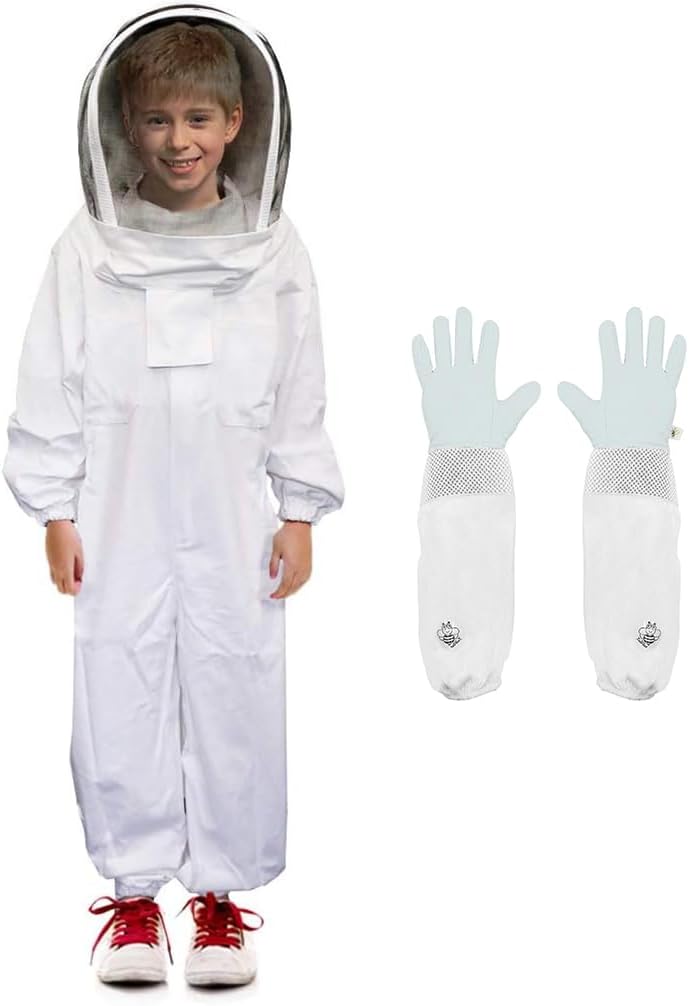
A kids beekeeping suit with elastic cuffs and a well-fitted veil keeps children comfortable and protected during inspections, which means they'll actually want to come back to the hive. Look for one with reinforced seams and a clear face panel so kids can see what they're doing.
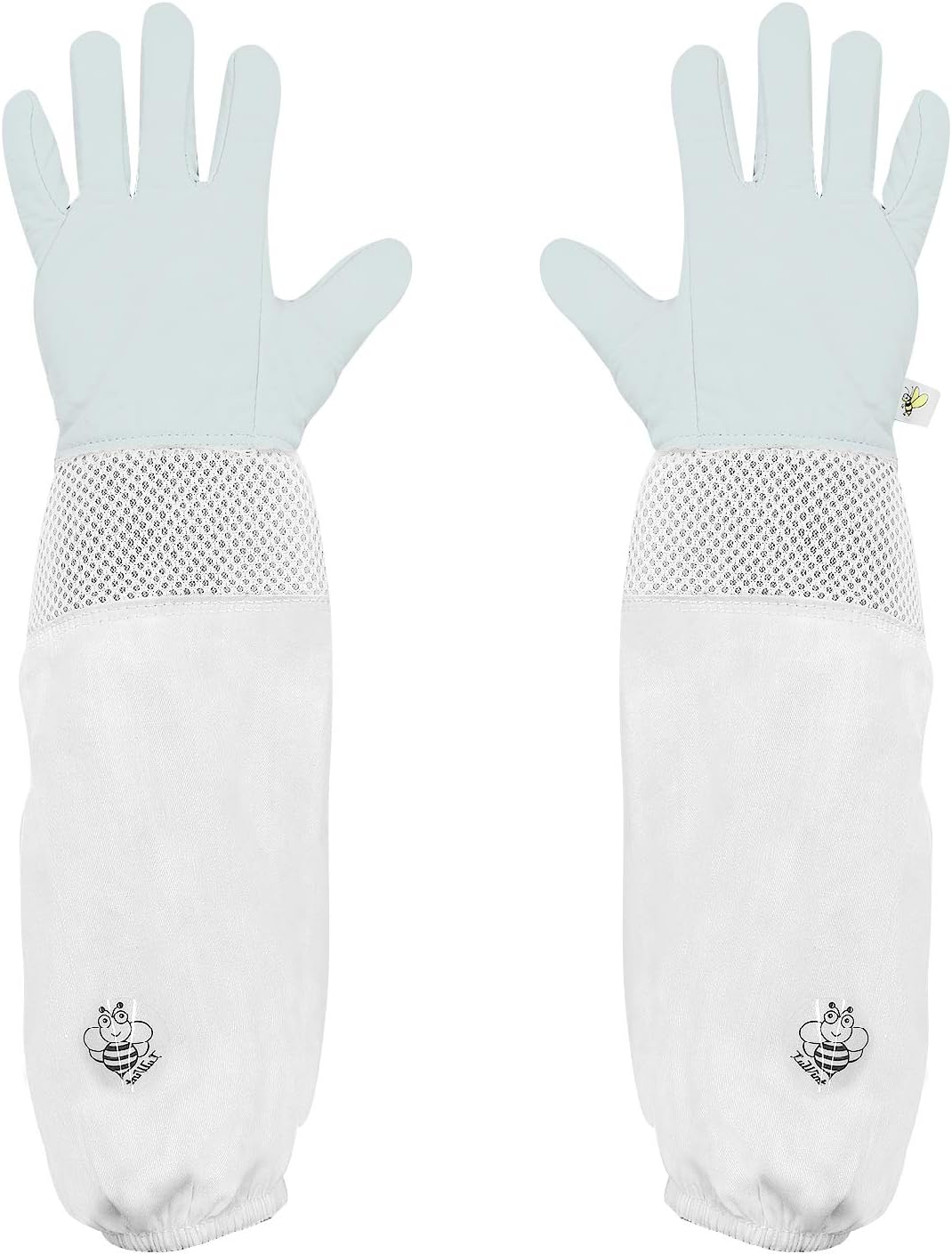
Kids beekeeping gloves that fit properly—snug at the wrist with good forearm coverage—are less likely to be removed mid-inspection and give children confidence handling frames. Leather lasts longer than cotton, but either material works if the fit is right.
Teaching Calm Behavior Around the Hive
Bees respond to sudden movements and vibrations. A child who runs, swats, or screams will provoke a defensive response. Before opening a hive, talk through what’s going to happen: “We’ll open the box slowly. We’ll look at the frames. We won’t touch anything unless I say it’s okay. If a bee lands on you, we stay still and let it fly away.”
Practice this away from the hive first. Have them stand still for 30 seconds. Then a minute. Then two. It sounds silly, but it works. Kids who’ve practiced standing quietly are less likely to panic when bees are around.
Use a smoker—not to hurt bees, but to calm them and mask alarm pheromones. Kids often find the ritual of smoking calming too. It gives them something to focus on besides their nervousness.
Never let a child work alone at a hive. You’re there to model calm behavior and step in if things go sideways. If a child seems scared, stop. There’s no prize for pushing through fear. End the session, try again another day.