Langstroth vs. Top Bar vs. Warre Comparison
The three main hive types—Langstroth, Top Bar, and Warre—work differently enough that your choice affects how you’ll spend your time and money. This guide compares them honestly so you can pick based on your actual situation, not marketing hype.
Management Style Differences
A Langstroth hive uses stacked boxes with removable frames that hang vertically. You pull frames out, inspect them, and put them back. This design lets you see every part of the colony quickly and is what most beekeepers worldwide use. It’s predictable and documented heavily online.
A Top Bar hive has one long horizontal box. Bees build comb on bars you lift from the top, and the comb hangs down. You see less of the hive at once and must be gentler—the comb is fragile. Many beekeepers find this method more intuitive because it mimics how bees build in tree cavities, but it demands more care during inspections.
A Warre hive is a vertical stack of small boxes. You add boxes at the bottom as the colony grows, and harvest from the top. It’s meant to be low-intervention: you don’t open it much. The trade-off is you have less control and visibility into what’s happening inside.
For beginners: The Langstroth hive’s straightforward frame-pulling method makes troubleshooting easier. Top Bar and Warre setups require more finesse and patience to avoid damaging comb.
Cost and Equipment Availability
A Langstroth hive starter kit (two boxes, frames, foundation—the pre-made wax or plastic sheet bees build comb onto—and tools) typically costs $150–$300. Replacement parts, extra boxes, and frames are cheap and widely available at any beekeeping supplier. If you need something, you can order it next week.
Top Bar hives cost $200–$400 for a complete setup. Fewer suppliers stock them, so parts take longer to find and cost more per item. You’ll likely need to build or special-order replacements.
Warre hives run $250–$450 and have the same sourcing problem as Top Bar hives—fewer suppliers, longer lead times, higher per-item costs.
The real cost difference: A Langstroth hive is cheaper upfront and vastly cheaper to maintain long-term. If a frame breaks in a Top Bar hive, you can’t just order a replacement from any supplier. If you need an extra box mid-season, Langstroth boxes are everywhere; Top Bar and Warre boxes are not.
Honey Yield Differences
Honey yields vary significantly by region, local forage, climate, and how actively you manage the colony—the figures below are general ranges, not guarantees.
A Langstroth hive typically produces 30–60 pounds of surplus honey per year in good conditions. The design supports honey production because the stacked-box system gives bees ample space to store comb.
Top Bar hives typically yield 10–30 pounds annually. The single horizontal chamber limits how much comb bees can build, and you’re not managing for maximum production—you’re managing for simplicity.
Warre hives generally fall in between: 20–40 pounds per year. The stacking design supports more comb than a Top Bar, but the low-intervention philosophy means you’re not pushing the colony to its limit.
The honest take: If honey production matters to you, a Langstroth hive is the clear choice. If you’re keeping bees for pollination, observation, or a small personal honey supply, the difference won’t matter much. Don’t buy a hive type based on yield alone unless you’re actually planning to sell honey.
Side-by-Side Comparison Table
Yield and inspection time figures are typical ranges; your results will vary by region, climate, and management style.
| Feature | Langstroth | Top Bar | Warre |
|---|---|---|---|
| Ease of inspection | Easy—frames pull straight out | Moderate—comb is delicate | Hard—limited visibility |
| Beginner-friendly | Yes | Steeper learning curve | Steeper learning curve |
| Upfront cost | $150–$300 | $200–$400 | $250–$450 |
| Part availability | Excellent | Poor | Poor |
| Honey yield | 30–60 lbs/year | 10–30 lbs/year | 20–40 lbs/year |
| Time per inspection | Typically 20–30 min | Typically 30–45 min | Typically 15–20 min |
| Hive management | Active | Active | Passive |
| Learning curve | Gentle | Steep | Moderate |
Recommended Products
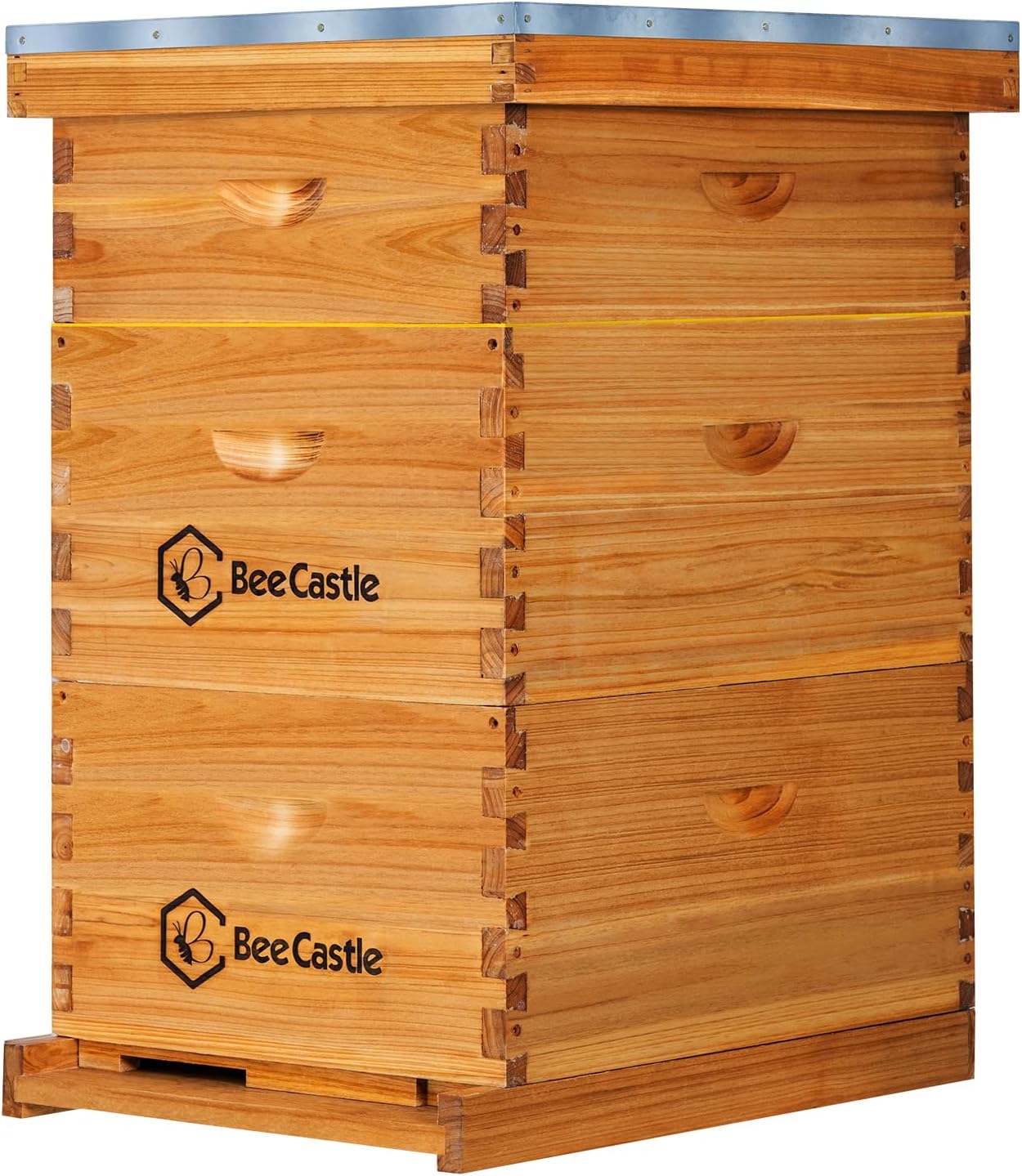
A langstroth beehive is the default choice for good reason—frames are standardized, parts are everywhere, and you can find advice for any problem within minutes online. Start with this unless you have a specific reason not to.