Best Screened Bottom Boards for Mite Control
A screened bottom board is a hive floor with a mesh screen instead of solid wood, designed to let varroa mites (a major pest) fall through and away from your bees. It’s a real tool for mite management, but it’s not a magic fix—and if you’re brand new, you might not need one right away.
Best Overall Screened Bottom Board
The screened bottom board Langstroth is the standard choice for most hobbyists because it fits the most common hive type and gives you reliable airflow plus mite drop. Langstroth hives are eight- or ten-frame boxes, and this board slides in exactly like a solid bottom, so installation is straightforward. The screen mesh is fine enough to let mites fall through but open enough that bees don’t get stuck. You’ll get better ventilation in summer, which reduces moisture buildup and fungal issues. The board usually costs $20–$40, depending on whether you buy it pre-assembled or as a kit. Look for one with a removable sticky board or inspection tray underneath—that lets you count mites over a few days to know if your colony actually has a problem worth treating.
When comparing brands, prioritize boards with a tight-fitting tray that slides cleanly in and out, since you’ll be removing it regularly to count mite drop. A well-fitted tray also keeps small hive beetles and other debris from accumulating in a gap where you can’t reach them. Paying a few extra dollars for a pre-assembled board with a coated or sealed tray is usually worth it for a beginner—rough, unsealed wood absorbs moisture and warps faster, making the tray difficult to remove after a season or two.
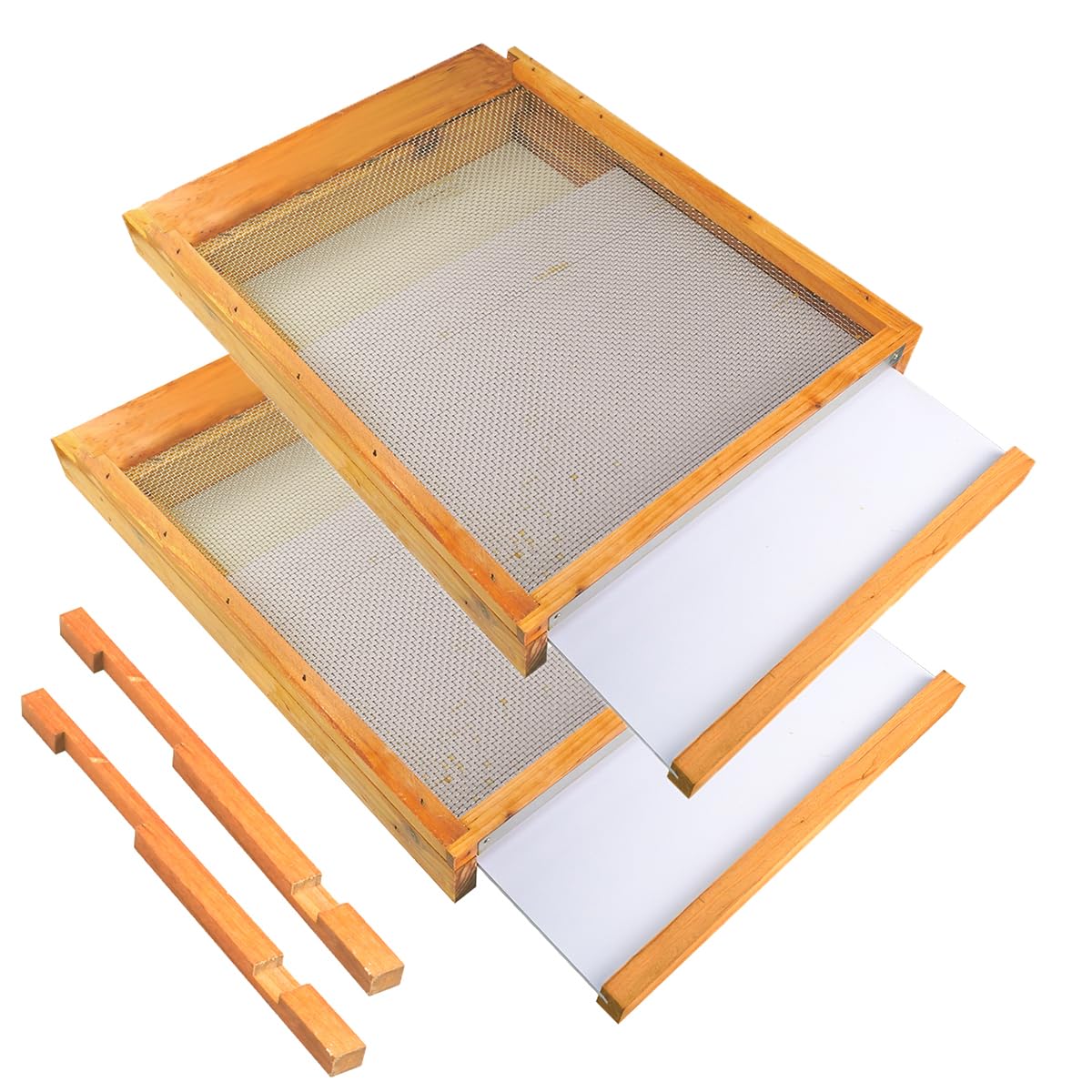
The screened bottom board Langstroth from most major beekeeping suppliers is a reliable, mid-range choice that fits standard eight- or ten-frame boxes and comes with a removable inspection tray for mite counting. It's durable enough for three to five seasons and widely available, so replacement parts and trays are easy to find.
Best Budget Option
A budget screened bottom board typically runs $12–$18 and does the same job as pricier versions: it lets air flow and mites drop. The main difference is build quality—cheaper boards may have rougher wood, less durable screening, or a tray that doesn’t slide smoothly. They work fine, but you might replace it sooner. If you’re building a second or third hive or testing whether screening helps your setup, a budget option makes sense. Just make sure the mesh is actually bee-proof (mites are tiny, but so are small debris and insects). Avoid boards so flimsy that they warp after one season of moisture and temperature swings.
If you go the budget route, plan to inspect the board at the start of each season and replace it if the screen has gaps or the wood has warped enough to leave openings at the edges. A warped board can create an unintended entrance that small hive beetles or wasps exploit. Budget boards are a reasonable starting point, but treat them as a short-term solution rather than a permanent fixture in a growing apiary.
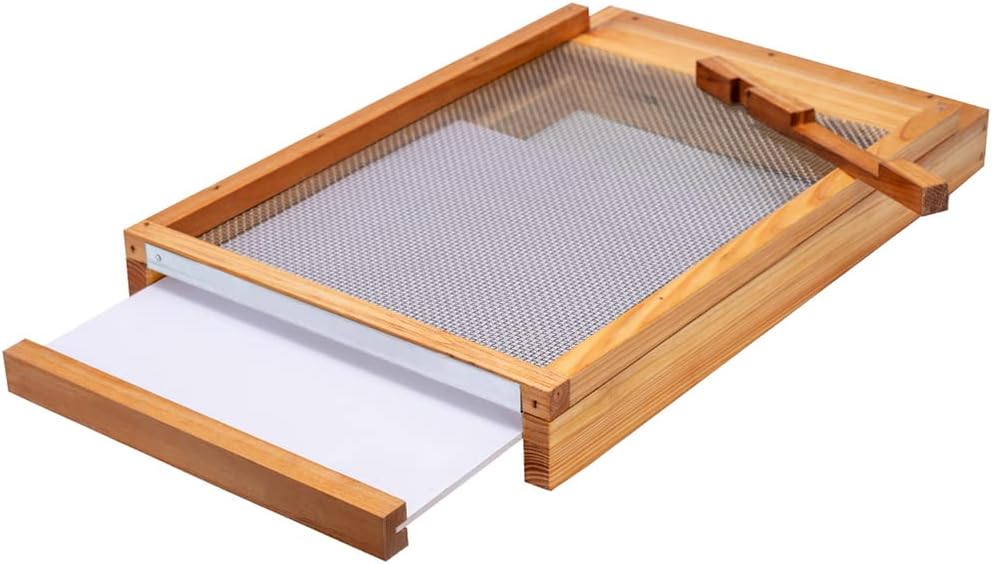
A budget screened bottom board from online retailers or local farm stores offers the same basic function at lower cost and works well if you're adding a second hive or want to try screening before committing to premium equipment. Check that the mesh is fine enough and the tray slides smoothly before buying, since cheaper models sometimes have loose screening or warped wood.
How Much a Screened Board Actually Helps
Screened bottom boards reduce mite numbers, but the effect is modest—not a cure. A healthy colony naturally sheds 10–50 mites per day; with a screened board, that number goes up slightly because mites that fall can’t crawl back up. The real value is visibility: you can count mites on the sticky board and decide whether to treat with other methods (like drone brood removal or miticides). If your colony is already collapsing from mites, a screened board alone won’t save it. If mites are under control, a screened board helps keep them that way. For a beginner, the main reason to buy one is airflow and the ability to monitor, not as your only mite defense.
Screened vs. Solid Bottom Boards
A solid bottom board is a flat wooden floor—it’s warmer, easier to clean, and cheaper ($8–$15). Screened boards are cooler, require more maintenance (cleaning the sticky board), and cost more. In cold climates, some beekeepers prefer solid boards in winter because they reduce drafts. In warm or humid climates, screened boards help prevent mold and give better air circulation. Neither choice is wrong. Many successful beekeepers use solid boards and manage mites through other tactics (regular inspections, treating when needed, requeening). If you’re just starting, a solid board is fine—you can add a screened board later if mite pressure becomes a real problem. Don’t feel pressured to buy screened equipment before you know what your actual mite load is.