Best Beekeeping Suits for Hot Weather
If you keep bees in hot weather, a ventilated beekeeping suit can make the difference between a tolerable inspection and heat exhaustion. But before you buy one, know this: you don’t need one to start beekeeping. A regular suit works fine in most conditions. A ventilated suit is a comfort upgrade, not a safety essential—and it comes with real tradeoffs you should understand first.
Best Overall Ventilated Suit
The ventilated beekeeping suit strikes the best balance for most hot-weather beekeepers because it pairs mesh panels (usually on the sleeves, back, and sides) with solid fabric on the chest and front where bees are most likely to crawl. This design keeps you cooler than a traditional suit without leaving you dangerously exposed. Look for suits with a full-length veil, reinforced seams, and elastic cuffs that seal properly at the wrists and ankles. The fabric should be tightly woven cotton or a cotton-poly blend—loose weave defeats the purpose. A good ventilated suit will have mesh that’s fine enough to stop a bee’s stinger but open enough to let air move.
Fit matters as much as fabric. A suit that’s too large will bunch and sag, creating gaps at the wrists, ankles, and collar where bees can enter. Size up only if you plan to wear thick clothing underneath in cooler months; otherwise, buy true to size. Check that the veil attaches securely to the suit body—a gap between veil and collar is one of the most common ways beginners get stung on the face. Detachable veils are convenient for washing but must zip or snap completely closed with no loose edges.
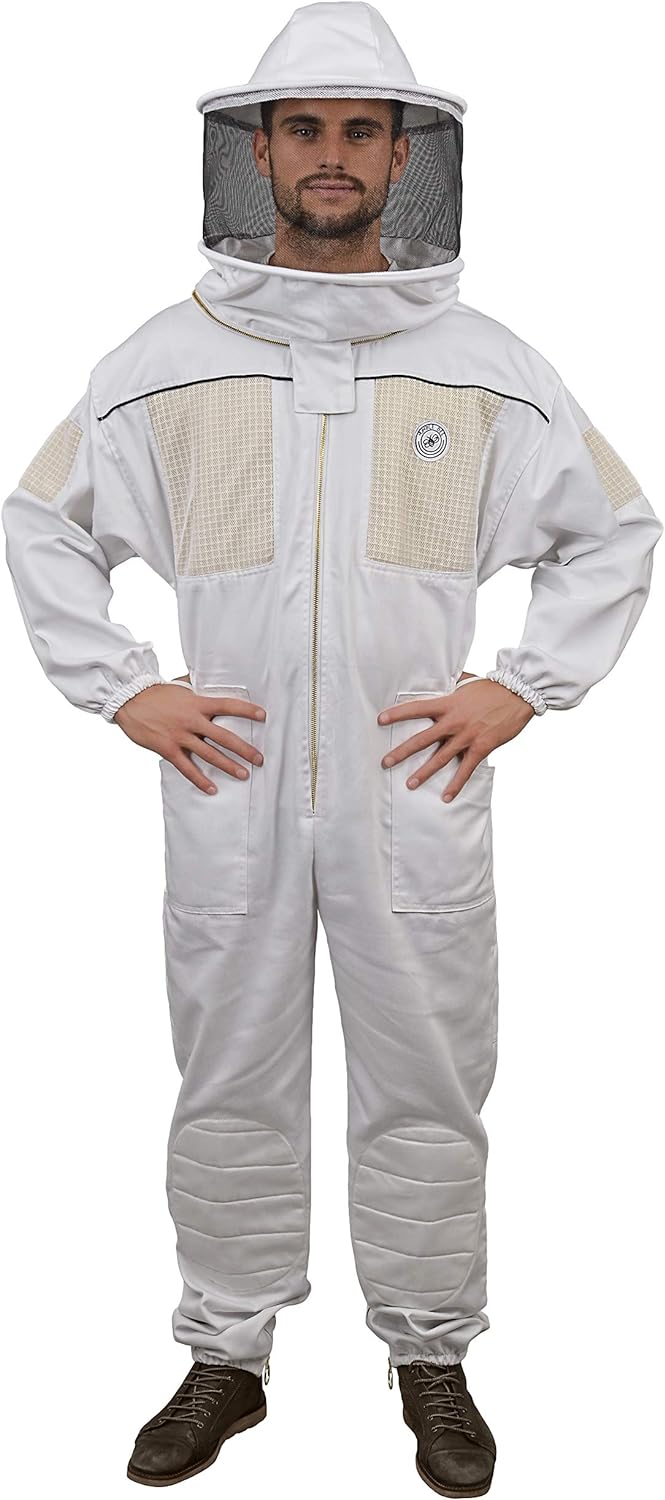
A ventilated beekeeping suit with mesh panels on the back, sides, and sleeves paired with a solid cotton front and reinforced seams will keep you cooler during long inspections while maintaining reasonable protection. Look for one with a full veil, elastic wrist and ankle cuffs, and a weight under 1 pound to avoid fatigue in heat. This is a genuine comfort upgrade for summer beekeeping, not a necessity for beginners, but well worth the investment if you live somewhere hot or keep bees during warm months.
Best Budget Beekeeping Suit
You can find a basic ventilated beekeeping suit for $50–80 that does the job without unnecessary features. Budget suits typically have mesh on the back and sides only, solid fronts, and simpler construction than premium versions. They work well if you’re testing whether ventilation actually helps you before investing more. The main difference from pricier options is usually durability—seams may fray faster, zippers might stick, and the veil attachment can be less refined. For a hobbyist who inspects hives 6–10 times a season, a budget suit is perfectly adequate.
Before buying, check that the mesh is truly bee-proof by holding it up to light and looking for gaps or loose weave. Confirm that elastic cuffs are included at both wrists and ankles—some budget suits omit ankle cuffs entirely, which is a real problem when bees crawl up from the ground. Avoid anything marketed as a “mesh suit” with no solid front panel; that’s false economy and genuinely risky. A little extra scrutiny at purchase saves a lot of frustration in the field.
What Ventilated Mesh Actually Does
Ventilated mesh is a tightly woven synthetic fabric, usually nylon or polyester, with holes small enough to stop a bee’s stinger but large enough to let air pass through. The mesh doesn’t cool you through evaporation—it just reduces the insulation effect of solid fabric. The mesh works best on panels where bees don’t naturally crawl: your back, sides, and upper legs. Your front, chest, and neck stay solid because that’s where bees cluster when they’re defensive. The veil is always solid mesh or screen because bees will investigate your face first.
One common misconception: ventilated mesh does not mean bees can’t sting through it. They absolutely can. The mesh just lets air move, not bees. If a bee is pressed against the mesh for a few seconds, her stinger can still penetrate. Ventilation is about comfort, not protection. Keep that distinction clear when you’re deciding whether a ventilated suit is right for your situation and your bees’ temperament.
Tradeoffs Between Airflow and Sting Protection
Here’s the honest part: adding mesh panels means slightly less protection. A bee pressed against solid fabric for a moment usually can’t sting through. A bee pressed against mesh for a moment might get her stinger through, depending on fabric thickness and how hard she’s trying. In practice, this risk is small—bees don’t typically sting through fabric unless they’re already defensive and crushed against it. The real tradeoff is visibility and mobility. Mesh panels can reduce your field of vision slightly and make it harder to see bees crawling on your suit.
You’ll also move more freely in a ventilated suit, which can sometimes mean you brush against bees instead of moving deliberately. Most beekeepers find the comfort gain worth the tiny increase in sting risk, especially in heat. If you’re working with an aggressive hive or you’re very nervous, stick with a traditional suit—the peace of mind is worth staying warm. For calm bees in hot climates, ventilated is the smart choice.