Leather vs. Nitrile vs. Cloth Gloves Comparison
If you want hand protection while beekeeping — and for beginners, gloves are strongly recommended — the three main options each have real trade-offs worth understanding before you spend money. Experienced beekeepers sometimes work with minimal hand protection once they know their hives and their own reactions, but when you’re starting out, gloves give you confidence and a margin of safety while you’re still learning. This guide breaks down what actually matters so you can pick the right glove for where you are in your beekeeping journey.
Sting Protection Comparison
Leather beekeeping gloves offer the thickest barrier against stings, typically made from goat or cow leather that’s stiff enough to resist a bee’s stinger. A determined bee can still get through if she pushes hard or finds a seam, but leather gives you the best odds — especially on your wrists and the back of your hands where bees cluster. The trade-off is that leather is heavy and stiff, which matters more than it sounds when you’re working for an hour.
Nitrile beekeeping gloves provide moderate protection through thickness (usually 6–10 mil), plus they’re stretchy enough to move with your hand. They won’t stop every sting, but they’ll block most casual contact. The material is also slippery, which can actually help — bees have a harder time gripping and positioning to sting. Nitrile fails fastest at the fingertips and seams, where repeated flexing wears it thin.
Cloth beekeeping gloves (canvas or cotton blends) are the thinnest option and offer minimal sting protection — basically just a layer between your skin and the bee. They’re mainly useful for keeping propolis (the sticky, resin-like substance bees use to seal gaps inside the hive) and wax off your hands rather than stopping stings. If sting protection is your priority, cloth gloves are not the answer.
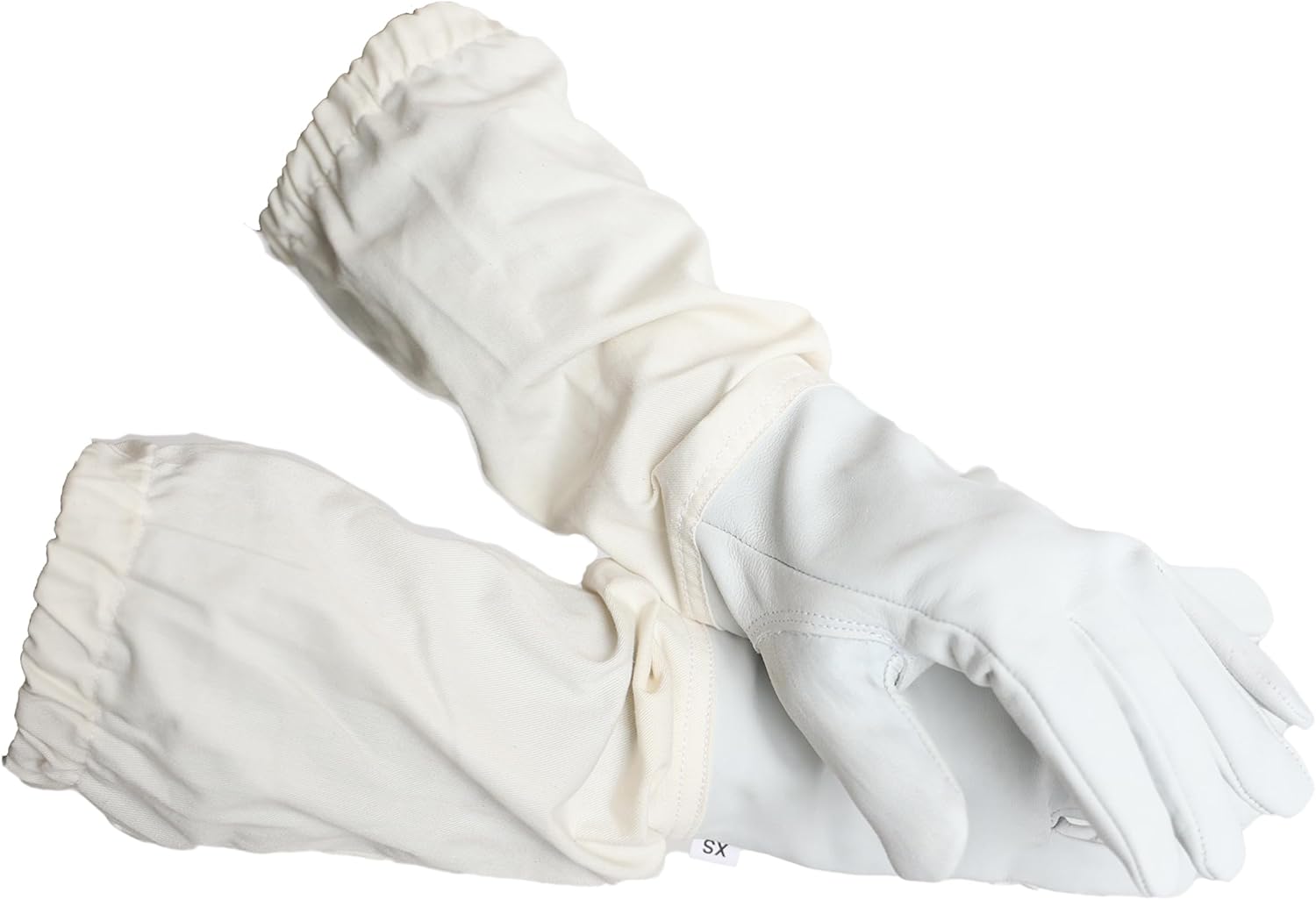
Leather beekeeping gloves are the traditional choice and still popular with beekeepers who prioritize protection and don't mind the stiffness. They last for years and develop a worn-in feel over time, though you'll sacrifice speed and precision while learning. Buy them if you're nervous about stings or plan to work with defensive colonies.
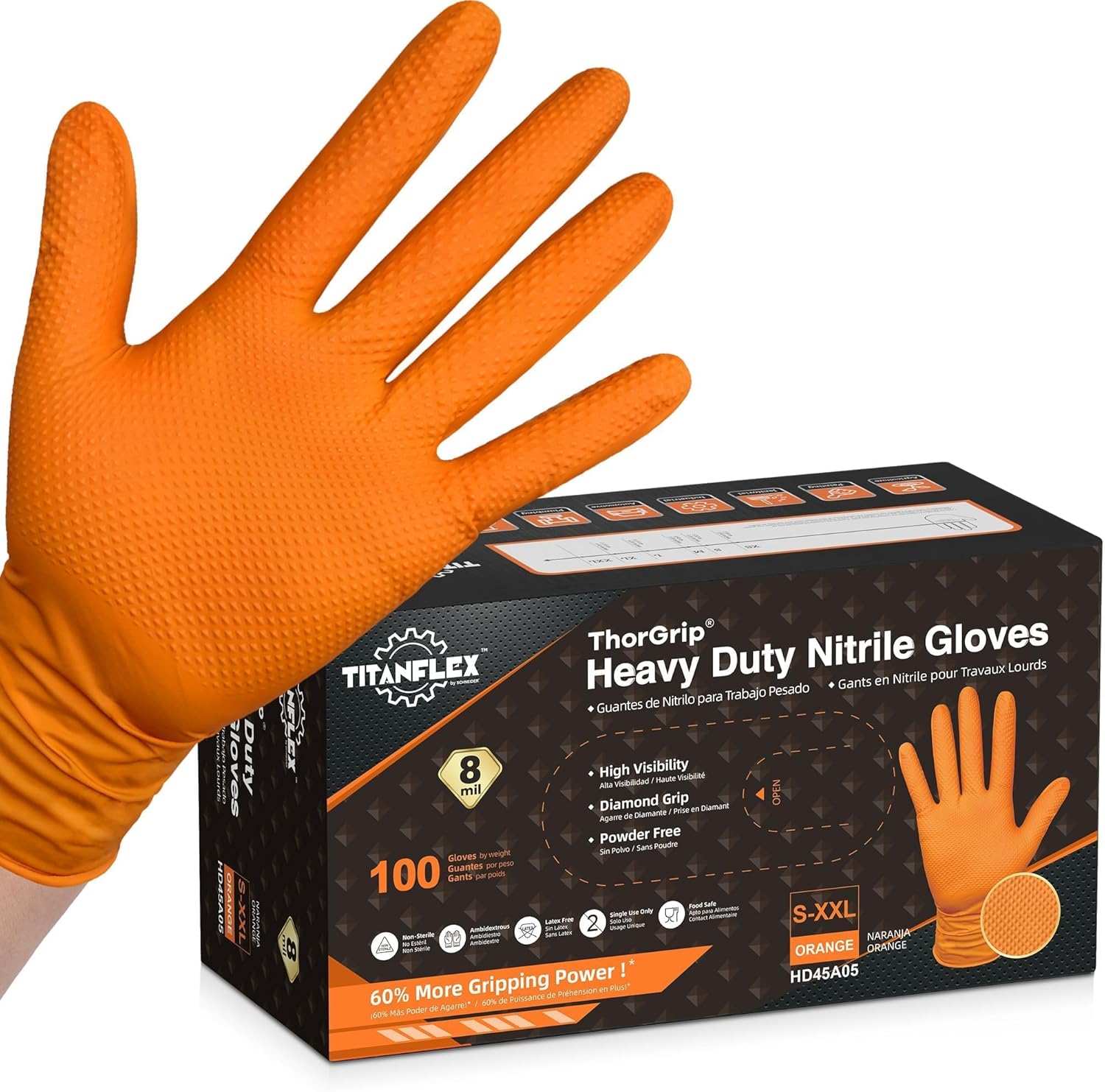
Nitrile beekeeping gloves offer a practical middle ground—decent protection without the bulk of leather, and easy to wash and replace. They're a safe first choice if you want some hand coverage without committing to the clumsiness of leather. Expect to replace them every season or two depending on how often you inspect.
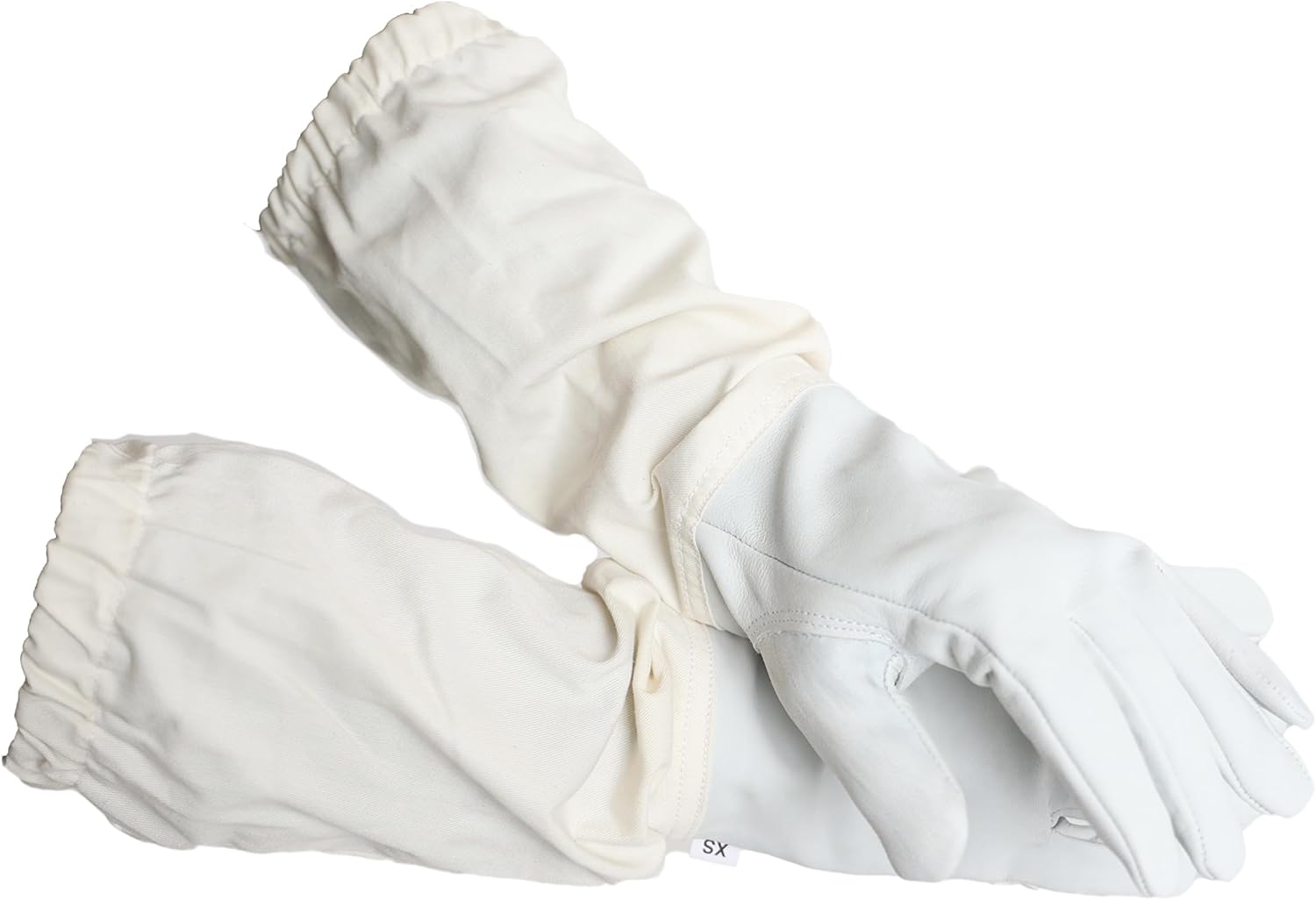
Cloth beekeeping gloves are cheap and won't slow you down, but they're honest about what they do—keep wax off your hands more than keep stings out. Use them if you're confident moving slowly around bees or if you want to practice working without heavy gloves before deciding whether protection matters to you.
Dexterity Comparison
Leather beekeeping gloves are stiff and clumsy, especially when new. You’ll struggle to feel frame edges (the wooden borders of the removable panels that hold the honeycomb), pick up small pieces, or manipulate a hive tool (the flat metal pry bar used to separate hive components) with precision. Many beekeepers find them frustrating for detailed work like spotting the queen among thousands of bees or carefully repositioning a frame. They do soften slightly with use and sweat, but they’ll never feel natural. If you’re a beginner still learning to move slowly and deliberately around the hive, the clumsiness might actually slow you down more than the protection helps.
Nitrile beekeeping gloves strike a middle ground — they’re stretchy and thin enough that you can feel what you’re holding and move your fingers with reasonable control. You can pick up a frame, manipulate a hive tool, and even do delicate tasks if you’re careful. The downside is that nitrile gets slippery when wet (sweat, damp grass, hive moisture), so your grip weakens just when you’re most likely to be sweating. Fingertips wear through quickly, which means you lose dexterity over time as the glove degrades.
Cloth beekeeping gloves offer the most tactile feedback of the three options and allow precise, quick hand movements. Your fingers stay relatively dry because the fabric breathes. The significant catch is that the thin material provides very little sting protection, so stings are likely if bees become defensive. Some experienced beekeepers use cloth gloves for the dexterity benefit, but for beginners who are still reading hive behavior and learning to move calmly, the lack of protection is a meaningful risk.
Durability and Cleaning
Leather beekeeping gloves last the longest if you care for them. A good pair can survive multiple seasons if you let them dry fully after use and occasionally condition the leather. They don’t wash well — water and soap damage the material — so you’ll mostly just wipe propolis and wax off by hand. Over time they get stained and sticky, but they keep working. The initial cost is higher, but cost-per-use drops over years.
Nitrile beekeeping gloves wear out faster, usually 1–2 seasons of regular use. The fingertips fail first, and once holes appear, the protection drops quickly. They’re cheap enough to replace, but you’ll be buying new pairs regularly. Nitrile washes easily in warm water, which is convenient for removing propolis and wax. They dry fast and don’t require special care, making them low-maintenance overall.
Cloth beekeeping gloves are disposable in practice. They absorb propolis, wax, and moisture, and they’re hard to clean thoroughly. Most beekeepers just throw them out when they get too sticky or stained. They’re inexpensive, so replacement isn’t painful. If you wash them, they’ll shrink and lose shape. For the price, they’re worth using once or twice and moving on.
Side-by-Side Comparison Table
| Feature | Leather | Nitrile | Cloth |
|---|---|---|---|
| Sting protection | Excellent | Good | Minimal |
| Dexterity | Poor | Good | Good |
| Durability | 2–3+ seasons | 1–2 seasons | Single season |
| Cost per pair | $25–40 | $8–15 | $5–10 |
| Washability | Poor | Excellent | Fair |
| Comfort | Stiff, heavy | Stretchy, can slip | Breathable |
| Best for | Maximum protection | Balanced approach | Speed and feel |