How Many Frames Does a Langstroth Hive Need?
A Langstroth hive frame count depends on the box size you choose and the stage of your colony’s growth. Most beginners start with either 8 or 10 frames per box, and you’ll likely need more frames as your colony expands. This guide walks you through the math so you buy the right amount from the start and avoid running short mid-season.
Standard Frame Count by Box Size
Langstroth hive boxes come in three standard depths: deep (also called brood boxes), medium, and shallow. A deep box holds 10 frames in the standard configuration, or 8 frames if you prefer the 8-frame setup. A medium box also holds 10 frames standard or 8 frames if you go that route. Shallow boxes, used mainly for honey storage, hold 10 frames standard or 8 frames in the smaller configuration.
The frame count isn’t arbitrary—it’s about spacing. Bees need room to move between frames, and too many frames crammed into a box restricts airflow and makes inspection harder. Too few frames, and the bees have too much open space, which they struggle to maintain at the right temperature. The standard 10-frame and 8-frame setups both work; the difference is mainly about how many boxes you’ll need to manage the same colony.
8-Frame vs. 10-Frame Frame Counts
The choice between 8-frame and 10-frame setups is one of the first decisions you’ll make, and it affects how many Langstroth hive frames you’ll buy overall.
An 8-frame setup uses 8 frames per box. A typical beginner colony starts with one deep box (8 frames) for the brood chamber. As the colony grows, you add a second deep box (another 8 frames) and then medium boxes for honey (8 frames each). By mid-season, a strong 8-frame colony might have 24–32 frames total across three or four boxes.
A 10-frame setup uses 10 frames per box. A beginner typically starts with one deep box (10 frames). A growing colony gets a second deep box (10 frames) and then medium boxes for honey (10 frames each). The same strong colony might have 30–40 frames total.
Neither is “better” for beginners. The 8-frame setup is lighter to lift and easier on your back, which matters if you’re older or have joint issues. The 10-frame setup fits more bees in the same footprint, so you need fewer boxes to house a large colony. Most beekeepers in North America use 10-frame, so buying used equipment is easier. Choose based on your physical comfort and what’s available locally.
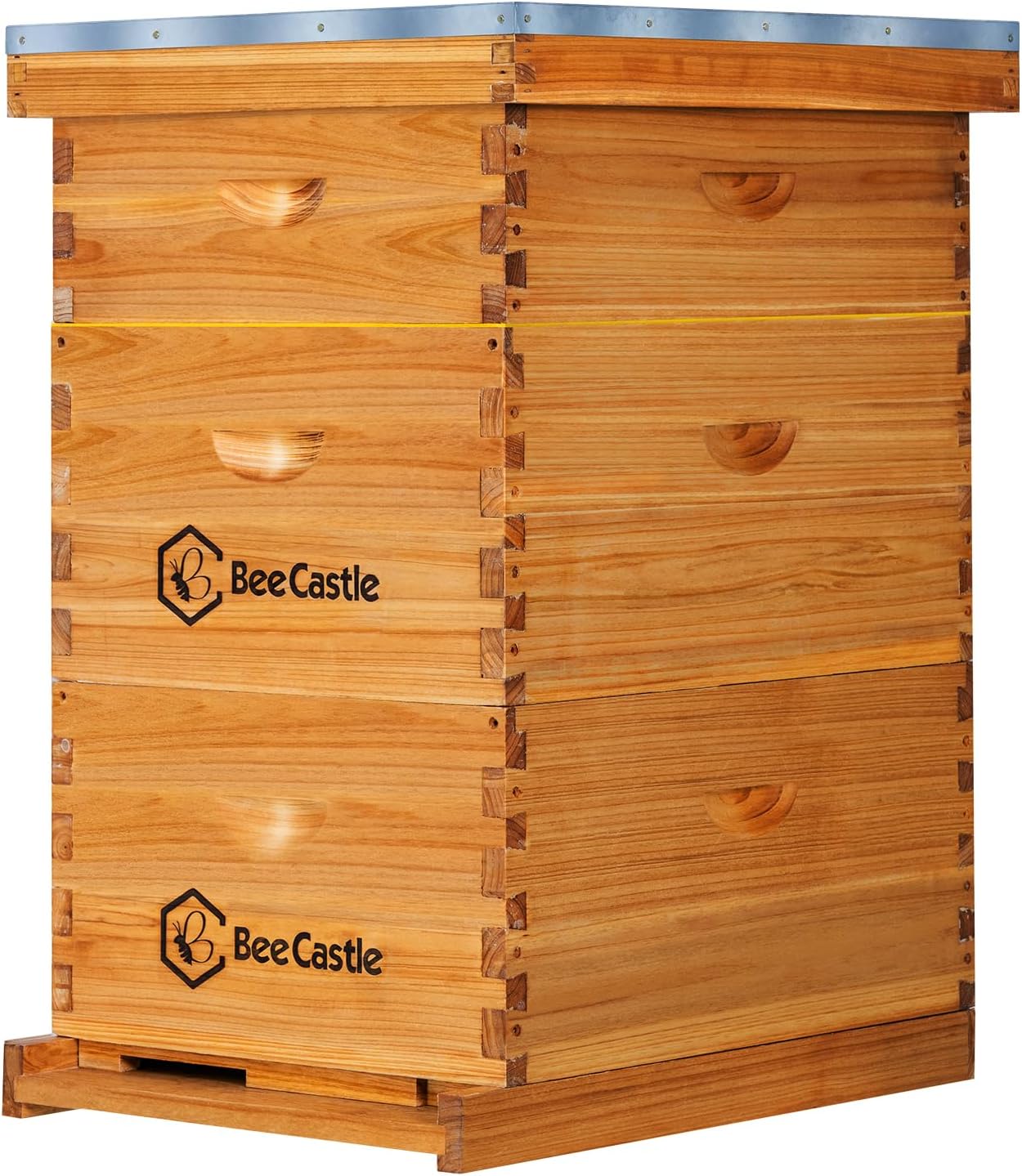
Langstroth hive frames are the standard wooden frame used in most Langstroth boxes, and they're essential—you cannot run a hive without them. Buy unassembled frames in bulk (usually 10 or 25 per package) and assemble them yourself to save money, or buy pre-assembled if your budget allows and you value the time savings.
How Frame Count Changes as the Colony Grows
You don’t buy all your frames at once. A typical beginner’s first year looks like this:
Spring (package or nuc arrival): Start with one deep box. A package install requires placing all 10 (or 8) frames in the box first, then shaking the bees onto them. A nuc (short for nucleus colony) already contains 5 frames of bees, brood, and food stores that you transfer directly into your box; fill the remaining spaces with new frames. In both cases, the bees will draw out the empty foundation — building fresh wax comb on the bare frames — over the following 2–3 weeks.
Early summer: The queen is laying heavily, and the colony is expanding. Around 4–6 weeks in, add a second deep box (another 10 or 8 frames, depending on your setup). This is your second brood chamber. A good rule of thumb: wait until 7 or 8 of the frames in the first box are covered with bees or comb before adding the second box. Add it too early and the colony struggles to keep the new space warm; wait too long and the bees may swarm.
Mid-summer: Once the second deep box is mostly full of brood and stores, add your first honey box (a medium box with 10 or 8 frames). This is where surplus honey goes.
Late summer: If the colony is strong and the nectar flow is good, add a second honey box (another 10 or 8 frames).
By the end of the season, a successful first-year colony might have 20–30 frames total. A very strong colony or one in its second year could have 40+ frames.
What Happens If You Use Too Few Frames
Running short of frames mid-season creates real problems. If the colony outgrows its box and you don’t add more frames, the bees become cramped. Overcrowding triggers swarming — the colony’s way of reproducing, where half the bees leave with a new queen. You lose half your workforce and honey production, and the swarm may nest somewhere unwelcome.
Overcrowding also makes disease spread faster and gives you less room to inspect for problems. If you use too few frames in your honey boxes, the bees may store honey in the brood chamber instead, making it harder to separate brood from stores at harvest.
The fix is simple: buy a few extra frames at the start. For a single hive, having enough frames to fill two deep boxes plus one or two medium boxes — plus a spare set — means you won’t be scrambling to order more mid-summer when you need to add a box quickly.