Langstroth vs. Top Bar Hive
The choice between a Langstroth hive and a top bar hive shapes how you’ll manage your bees for years. Both work, but they’re built differently, require different skills, and suit different beekeepers. Understanding what each one actually involves will save you money and frustration.
What a Langstroth Hive Looks Like
A Langstroth hive is a vertical stack of rectangular boxes. Picture a filing cabinet standing upright. Each box holds ten or eight wooden frames that hang side by side, like files in a drawer. The frames hold the beeswax comb where bees store honey and raise brood (baby bees). You stack boxes on top of each other as the colony grows—typically one or two deep brood boxes at the bottom where the queen lays eggs, then shallower honey supers added above for the surplus honey you’ll harvest. The whole thing sits on a bottom board, and a roof covers the top. It’s modular and stackable, which is why most commercial beekeepers use it.
The frames are removable, so you can pull them out to inspect the colony, check for disease, or harvest honey. This design has been standard for over 150 years, which means parts are cheap and widely available. You can buy frames, boxes, and tools at any beekeeping supply store.
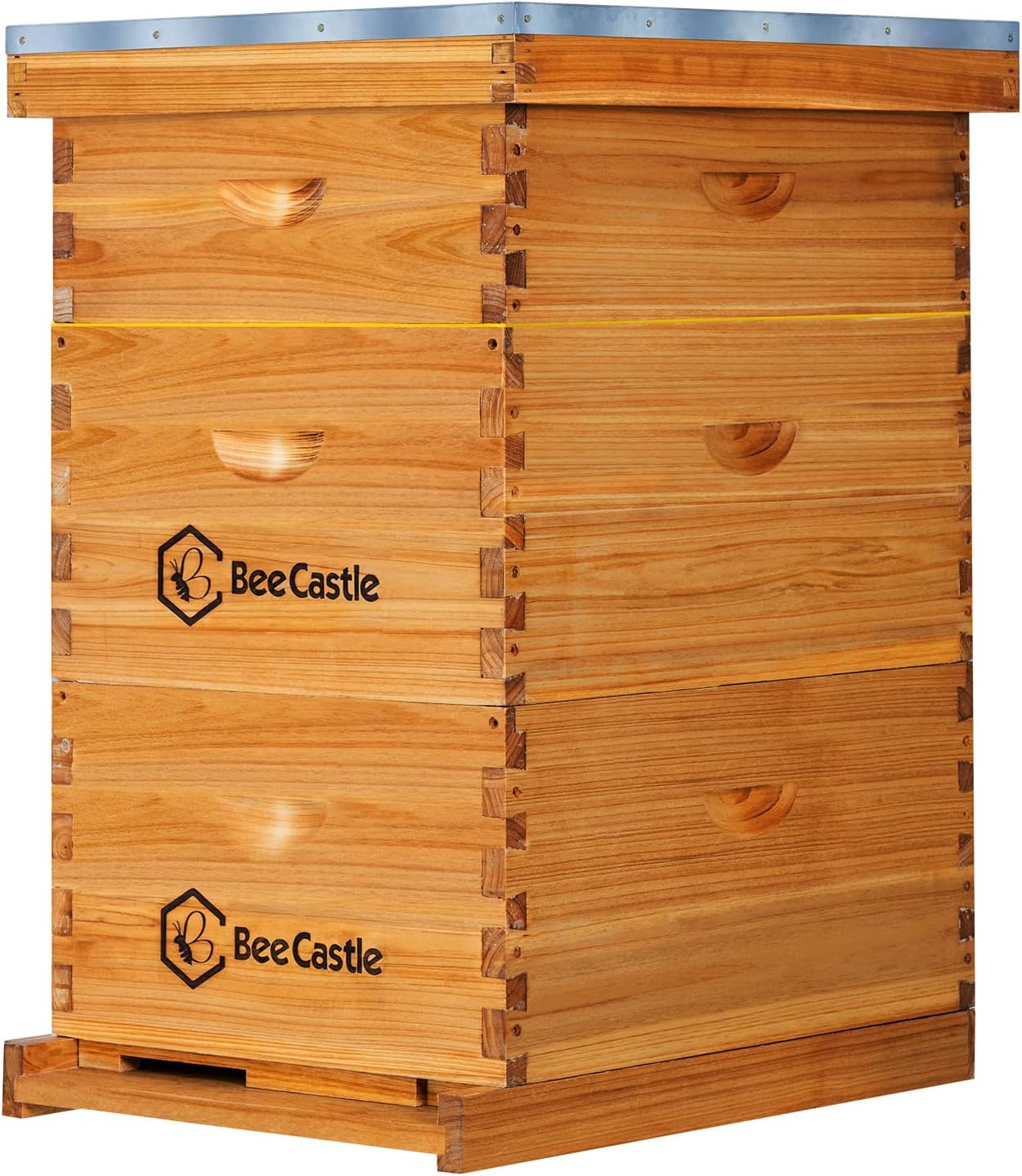
A Langstroth hive kit includes a bottom board, two brood boxes with ten frames each, a honey super, an inner cover, and a roof—everything you need to start. Buy from a regional supplier so you can inspect the wood quality and get local advice on assembly.
What a Top Bar Hive Looks Like
A top bar hive is a long, horizontal trough—think of a wooden canoe turned upside down. Instead of hanging frames, bees build comb naturally downward from wooden bars that run across the top of the hive, like the rungs of a ladder. You don’t add boxes; the hive stays one long chamber. Bees fill it from one end to the other as they grow. It’s simpler to build and requires fewer parts.
Inspecting a top bar hive means lifting bars out one at a time. The comb hangs down from each bar, and you can see what’s happening without stacking or unstacking boxes. Some beekeepers prefer this because it feels less invasive—you’re not dismantling the whole structure. However, the comb is fragile and can break easily, especially if you’re new to handling it. There’s also no standard design, so parts aren’t interchangeable between makers, and replacement bars or equipment are harder to source.
Side-by-Side Comparison
Setup and space: A Langstroth hive needs a small footprint but grows upward—stacks can reach shoulder height or taller. A top bar hive spreads horizontally and stays low, so it takes up more ground space but is easier to reach into without a ladder.
Inspection: Langstroth frames slide out individually, so you can examine one frame at a time without disturbing the whole hive. Top bar hives require you to lift bars and handle fragile comb, which takes more care and practice.
Honey harvest: Langstroth hives are designed for extracting honey with a centrifuge (a machine that spins frames to fling honey out). Top bar hives require crushing and straining the comb, which is messier and yields less honey because you destroy the comb structure.
Cost: A basic Langstroth hive kit runs $150–$300. Top bar hive kits are often cheaper upfront ($100–$250), but you’ll spend more replacing broken comb and sourcing parts over time.
Learning curve: Langstroth hives follow a predictable rhythm that’s documented in hundreds of books and videos. Top bar hives are less standardized, so advice varies, and you’ll troubleshoot more on your own.
Bees’ perspective: Top bar hives allow bees to build comb naturally without plastic or wax foundation, which some beekeepers believe is healthier. Langstroth hives use foundation (a template), which guides comb building but is less “natural.”
Which One a Beginner Should Actually Choose
Choose a Langstroth hive if you want the easiest path forward. You’ll find mentors, classes, and spare parts everywhere. Inspections are straightforward, and you can harvest honey without special equipment. If you mess up, you can fix it cheaply. Most beginner beekeeping guides assume you’re using a Langstroth.
Choose a top bar hive only if you have a specific reason: you have very limited space, you’re philosophically committed to natural beekeeping, or you have an experienced top bar beekeeper nearby to mentor you. Don’t pick one just because it’s cheaper upfront. The learning curve is steeper, and you’ll lose bees or give up faster if you’re already uncertain.
If you’re genuinely undecided, start with a Langstroth. You can always try a top bar hive later once you understand bee behavior and hive management. Switching the other way around is harder.