Do You Need Gloves for Beekeeping?
Beekeeping gloves are optional, not essential—and many successful keepers work without them. Whether you need them depends on your comfort level with stings, your hive temperament, and how quickly you can work. This guide cuts through the marketing and helps you decide honestly.
What Gloves Protect Against
Beekeeping gloves reduce the number of stings you’ll receive when you open a hive. Bees can sting through bare skin, and while a single sting is rarely dangerous for non-allergic people, multiple stings hurt and can discourage you from inspecting your hives regularly. Gloves create a physical barrier that many bees won’t penetrate, and they also give you psychological confidence—you’re less likely to jerk your hands away suddenly, which can agitate the colony further.
That said, gloves don’t make you immune. Determined bees will still sting through fabric, especially if they’re already defensive. Gloves are most effective at preventing accidental stings when you brush against the hive or move slowly through frames. They’re less useful if your bees are genuinely aggressive; in that case, the real solution is requeening or replacing the colony, not better protective gear.
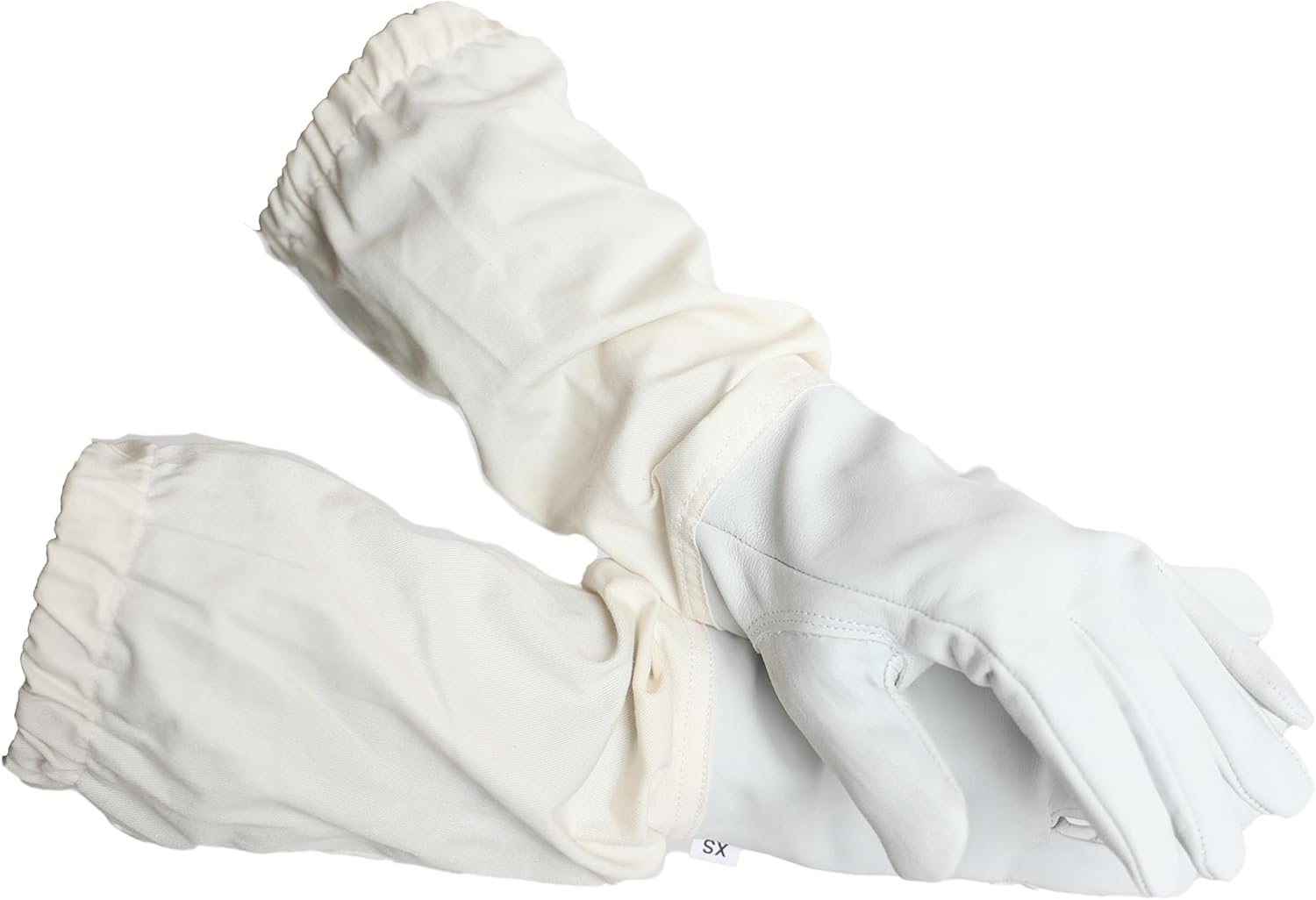
Beekeeping gloves typically come in small to large sizes and are made from goat leather or canvas with elastic cuffs that fit over your jacket sleeves. Look for a pair with reinforced palms and fingers, since those areas take the most wear; leather tends to last longer than canvas but costs more. Most cost between fifteen and thirty dollars, and one pair will last several seasons if you rinse them occasionally and let them air dry.
Why Some Experienced Keepers Skip Them
A significant number of experienced beekeepers choose to work without gloves, and there’s a practical reason: bare hands let you feel what you’re doing. You can sense whether a frame has capped cells (cells sealed with wax, indicating mature honey or developed brood), detect the texture of healthy brood, and move with precision. Gloved hands are clumsy by comparison—you lose fine motor control and tactile feedback.
Experienced keepers also develop a rhythm and confidence that reduces stings naturally. They work slowly, deliberately, and predictably. They know how to read hive behavior and back off before bees become defensive. They’ve also usually selected or bred calmer colonies over time. For these keepers, gloves feel unnecessary and counterproductive. But this skill takes years to build, and it’s not a realistic expectation for someone starting out.
Dexterity Tradeoffs
Beekeeping gloves come in leather or canvas, often with long cuffs. They’re warm, they muffle your sense of touch, and they make small manipulations harder. If you’re trying to gently separate frames, mark a queen, or position a frame back into the box, gloves slow you down and increase the chance you’ll accidentally crush a bee or damage comb.
The longer you wear gloves, the more you’ll notice the limitation. Your hands get hot inside them. You can’t feel the difference between a frame that’s stuck and one that’s ready to move. You might fumble and drop equipment. These aren’t deal-breakers, but they’re real costs. Some keepers compromise by wearing gloves on one hand and leaving the other bare, or by wearing thin cotton gloves instead of heavy leather ones. Neither solution is perfect, but both reduce the worst of the dexterity loss.
A Reasonable Default for Beginners
If you’re starting out, wear beekeeping gloves for your first few inspections. They’ll give you confidence, reduce your anxiety about stings, and let you focus on learning hive anatomy and bee behavior instead of worrying about getting stung. Once you’ve opened a few hives and gotten a sense of your bees’ temperament, you can decide whether to keep wearing them.
Many beginners find they become comfortable working with fewer layers of protection over time, particularly if their bees are reasonably calm. Others continue wearing gloves throughout their beekeeping and that’s a perfectly valid choice—there’s no shame in preferring them. One important caveat: if you’re in a region where Africanized honey bees are present, check local guidance before reducing your protective gear. Africanized colonies are significantly more defensive than typical European honey bee colonies, and full protective equipment is strongly advisable in those areas regardless of your experience level.
The key is making an informed choice rather than assuming you need gloves or assuming you don’t. Buy one pair, try them, and adjust based on what actually happens in your yard, not what you imagined beforehand. If your colony turns out to be defensive, gloves won’t solve the real problem, but they’ll make inspections less miserable while you work on a longer-term fix.