Best Swarm Traps for Catching Bees
A swarm trap is a simple box designed to attract and catch a free swarm of bees—usually a colony that has left its hive to find a new home. For most beginners, buying a trap isn’t urgent; you’re more likely to start with purchased package bees or a nucleus colony (a “nuc”—a small, starter colony on a few frames, sold by beekeepers as a ready-to-go unit). But if you live near wild bees or want to expand your apiary for free, a trap is a practical, low-cost tool worth understanding.
Best Overall Swarm Trap
A standard swarm trap box is a wooden structure about the size of a small nuc (roughly 40 liters or 10 gallons), with a small entrance hole and internal comb guides. A box trap that mimics the cavity bees naturally seek—enclosed, dark, and appropriately sized—works well in either a horizontal or vertical orientation. Look for traps made from untreated pine or cedar, with an entrance hole between 1.25 and 1.5 inches—large enough for foragers but small enough to feel secure to a swarm. Internal comb guides or old brood comb help attract scouts. A good trap should have adequate ventilation, a removable roof or side panel for easy access, and drainage holes. Expect to spend $40–80 for a quality wooden trap. The advantage of a purpose-built trap over a DIY version is consistency and durability; commercial traps are designed to last multiple seasons and are easier to mount securely.
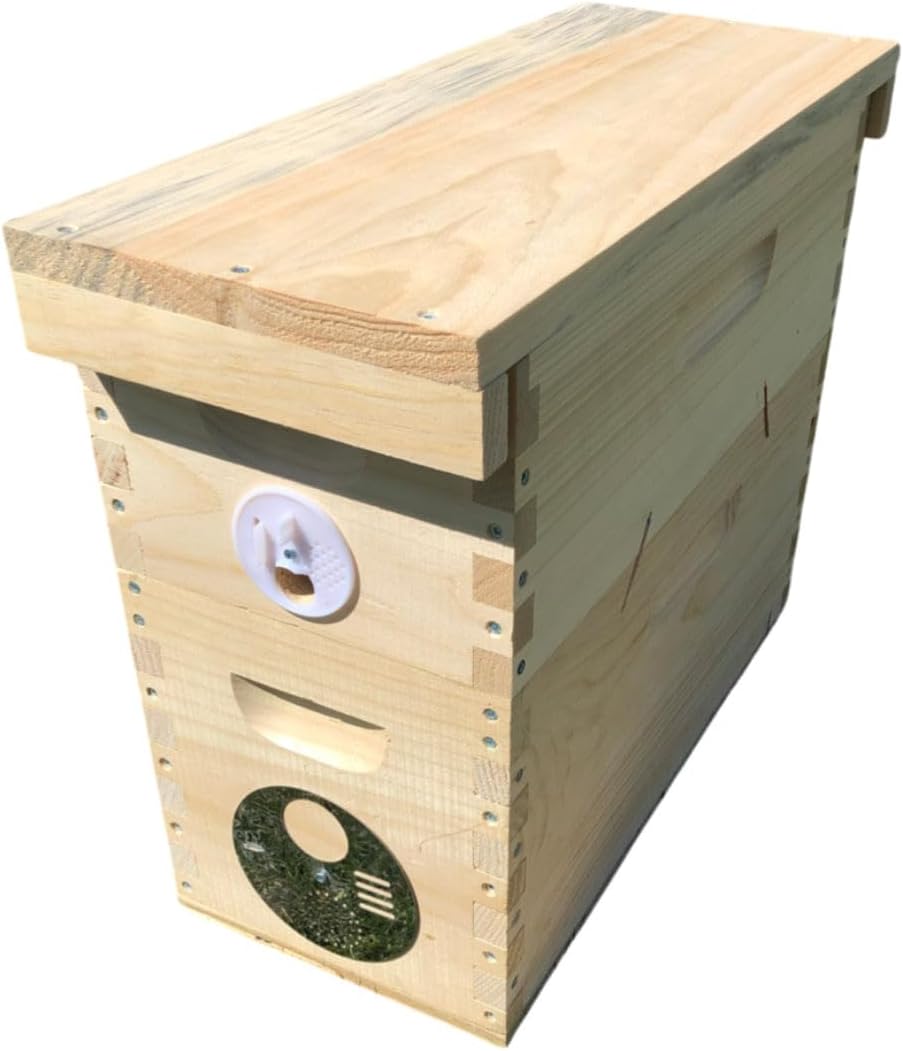
A swarm trap box is a ready-made wooden trap sized for a swarm, usually featuring an entrance hole, internal comb guides, and ventilation—the most reliable off-the-shelf option for serious swarm trappers.
Best Budget Option
If you want to try swarm trapping without spending much, a five-frame nuc box works reasonably well as a trap—you likely already have one if you keep bees. Place it in a shaded spot 10–15 feet high, add a few frames of old brood comb or drawn comb, and seal most of the entrance, leaving only a 1.5-inch hole. The catch rate is lower than a dedicated trap because the entrance is larger than ideal and the box is smaller, but it costs nothing extra. Alternatively, a used Langstroth deep (a standard full-depth hive box, the most common hive format in North America) with entrance reducers and internal comb guides runs $20–30 and functions adequately. Neither option is as effective as a proper trap, but both work if you’re testing the concept or live in an area with frequent swarms. The trade-off is time: you’ll need to monitor more traps to catch the same number of swarms.
A budget swarm trap is a simplified or used trap design (often a nuc box or modified Langstroth deep) that costs little but requires more traps to achieve the same catch rate as a purpose-built model.
Trap Placement and Lure Choice
Location is everything. Place your trap 10–20 feet high (on a pole, tree, or building), in partial shade, and away from your existing hives—swarms avoid established colonies. Scout bees look for cavities in spring and early summer, so set traps out by April and leave them until July. The entrance should face southeast or east to catch morning sun and warmth. Lure choice matters: old brood comb is the gold standard because it smells like home to scout bees. If you don’t have brood comb, use a few drops of lemongrass oil or swarm lure on a cotton ball inside the trap, or rub the interior with propolis (the sticky, resinous substance bees collect from tree buds and use to seal gaps in the hive). Some beekeepers use a combination—comb plus lure. Refresh lure every 2–3 weeks if the swarm hasn’t arrived. Check traps weekly during swarm season; a swarm can fill a trap in hours, and bees left in an unventilated trap in heat will die. If you catch a swarm, you’ll know immediately—the entrance will be covered in bees and the box will hum loudly.

Swarm trap lure is a bottled scent (often lemongrass oil or synthetic bee pheromone) designed to attract scout bees to your trap, useful if you don't have old brood comb on hand.
What to Do After You Catch a Swarm
Once you’ve caught a swarm, move quickly. If the trap is small (like a nuc), transfer the bees to a full-size hive box within 24 hours to prevent overcrowding. Gently shake or brush the bees into the new box, keeping the frames they’ve built comb on. Set the hive in its permanent location, give it space to forage, and leave it alone for a week. Check for a laying queen within two weeks; if you don’t see brood, the swarm may have been a cast—a secondary swarm that leaves the original hive after the primary swarm departs, sometimes headed by a virgin queen who needs time to complete mating flights before she begins laying. Give it a few more days before drawing conclusions, and consider consulting a local beekeeper if you’re unsure. Provide a feeder with sugar syrup if nectar is scarce—a caught swarm has no stored food. Treat a caught swarm like a new package: feed, monitor for disease, and don’t expect a honey surplus the first year. The advantage of catching swarms is that they’re already acclimated to your area and often build comb quickly, but they’re also wild-caught and may carry mites or disease, so inspect them carefully.