Ventilated vs. Standard Beekeeping Suit
A beekeeping suit protects you from stings, but the style you choose affects how hot you get during the work. The main choice is between a ventilated beekeeping suit, which has mesh panels to let air flow, and a standard beekeeping suit, which is solid fabric throughout. For most beginners, either will work—pick based on your climate and how much heat bothers you.
Comfort and Heat Differences
A ventilated beekeeping suit has mesh panels built into the sleeves, back, or sides. These panels let air circulate around your body while you work, which makes a real difference on warm days. You’ll sweat less and feel less claustrophobic. The trade-off is that the mesh is only as protective as the fabric behind it—the suit relies on multiple layers, so a bee can’t sting through the mesh directly into your skin.
A standard beekeeping suit is made of solid, tightly woven cotton or cotton-polyester blend. It traps heat more than a ventilated suit. On a 75°F day, you’ll notice the difference—you’ll be warmer and may sweat more. However, solid fabric also means there’s no question about protection; a bee cannot reach you through the material. Many beekeepers work in standard suits without complaint, especially if they keep their sessions short or work early in the morning when it’s cooler.
If you live somewhere with mild springs and falls, a standard suit is fine. If you’re in a hot climate or plan to spend hours in the hive during summer, a ventilated suit will make the work more tolerable. Neither suit is uncomfortable enough to stop a beginner from beekeeping—it’s a comfort choice, not a safety one.
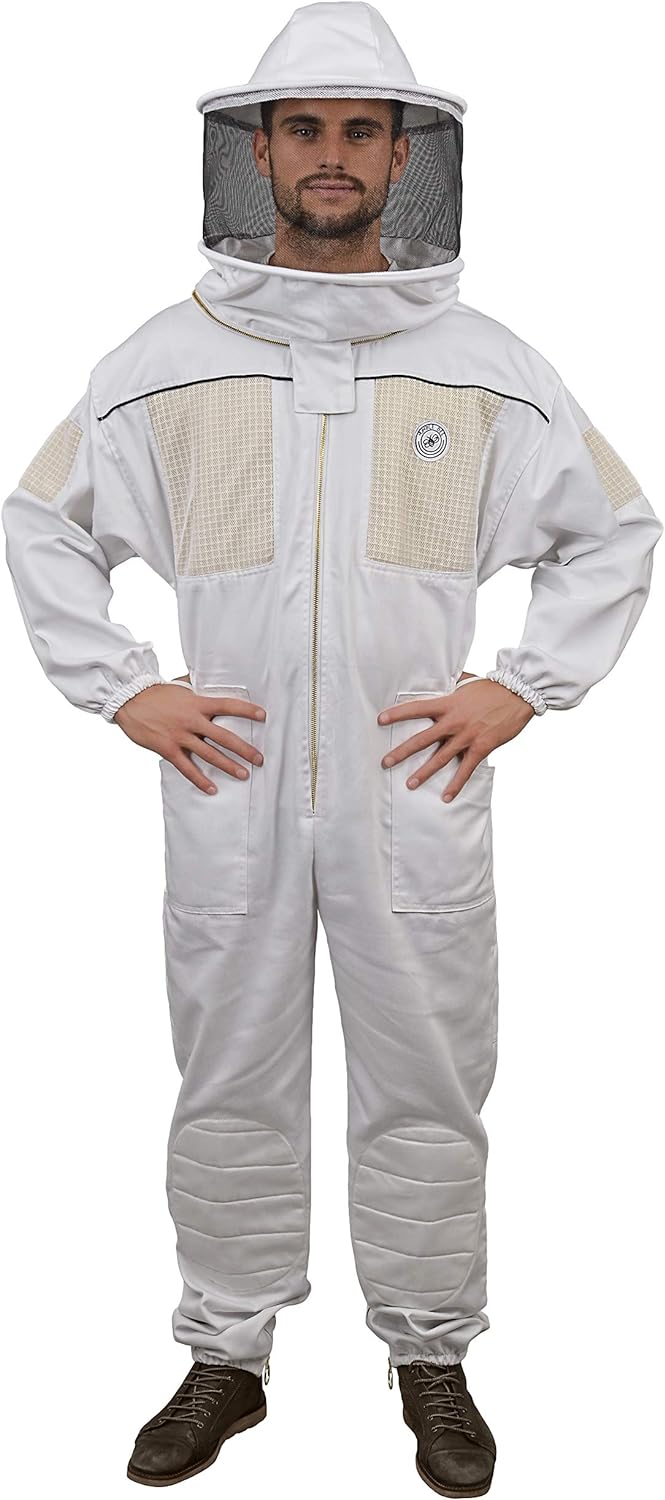
A ventilated beekeeping suit offers mesh panels in the back, sides, and sleeves to keep you cooler during longer inspections, and the mesh is backed by solid fabric so protection remains complete. Expect to pay $80–$150 and get a suit that works well in warm weather and remains protective in any season.
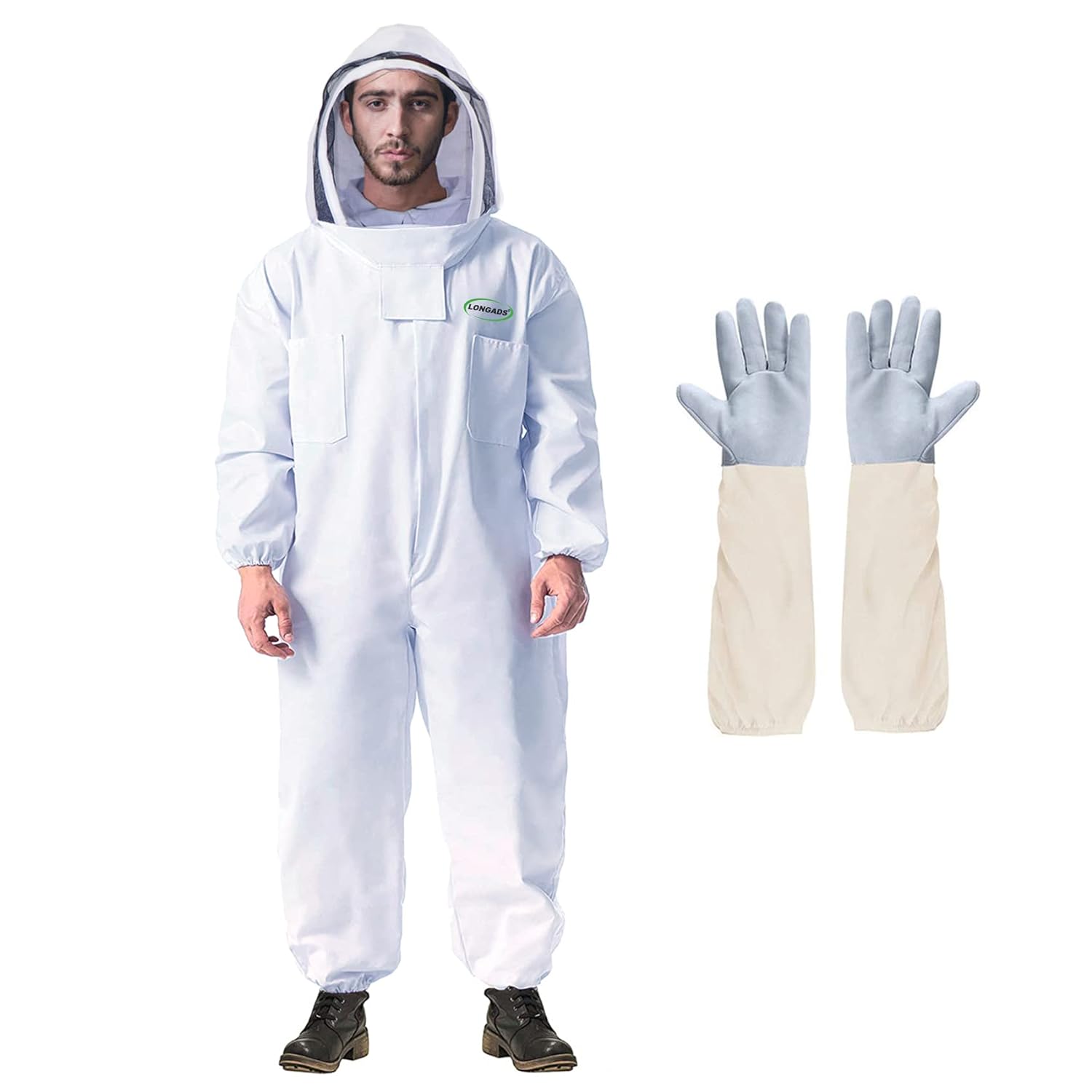
A standard beekeeping suit is made of solid, tightly woven cotton or cotton-poly blend and costs $50–$100, making it a practical choice for beginners in mild or cool climates or for short hive visits where heat isn't a major factor. It offers the same sting protection as a ventilated suit with no compromises, just less airflow.
Sting Protection Differences
Both suit types protect you equally well against stings, as long as they’re worn correctly with the veil zipped or tucked and the gloves on. The ventilated beekeeping suit’s mesh panels are backed by solid fabric underneath, so a bee cannot push through both layers. Tests and real-world use confirm that ventilated suits stop stings just as effectively as standard suits.
A standard beekeeping suit offers the same protection with no mesh at all—just solid fabric. Some beekeepers prefer this simplicity and feel more confident with no gaps anywhere. In practice, the difference in sting protection between the two is negligible if you’re wearing either one properly.
The real sting-protection variable isn’t the suit type—it’s fit and how you wear it. A loose suit with gaps at the wrists or ankles is riskier than a well-fitted ventilated suit. Wear your gloves over the sleeves, tuck your pants into your socks, and zip the veil all the way. Do that, and you’re protected in either suit.
Price Differences
A ventilated beekeeping suit typically costs $80 to $150, depending on the brand and quality. The mesh panels and extra construction add a bit to the price.
A standard beekeeping suit usually runs $50 to $100. It’s simpler to make, so it costs less.
The price gap isn’t huge—maybe $30 to $50 difference. If heat is an issue for you, the extra cost is worth it for comfort. If you’re on a tight budget and live in a cool climate, a standard suit is a smart choice. Either way, you’re not breaking the bank.
Which One Fits Your Climate
Hot climates (above 80°F regularly in season): A ventilated beekeeping suit is the better choice. You’ll work longer and feel better. The mesh doesn’t compromise safety, and the comfort boost is real.
Mild climates (60–75°F): Either suit works. A standard beekeeping suit is cheaper and simpler. A ventilated suit adds comfort for not much extra money. Pick based on budget.
Cool climates (below 60°F): A standard beekeeping suit is fine. You won’t overheat, and you save money. Many northern beekeepers use standard suits year-round.
Variable seasons: If you keep bees spring through fall and temperatures swing widely, a ventilated beekeeping suit is more versatile. It works in cool weather too—you just won’t need the ventilation as much. A standard suit works in all conditions but gets uncomfortable in heat.