How to Make Propolis Tincture
Propolis tincture is a concentrated extract of propolis—a resinous mixture bees collect from tree buds and use to seal their hive. It’s popular in folk medicine and some people add it to tea or use it topically, but you don’t need to make it to be a successful beekeeper. If you’re curious about it or want to use your own hive’s propolis, this guide will walk you through the basic process.
Step 1: Collect and Freeze Propolis
Propolis accumulates on your hive’s inner walls and frames, especially in autumn. You can harvest it by placing a mesh screen or propolis trap on top of the hive in late summer or early fall; bees will fill the gaps with propolis, and you can pop it off and freeze it. Alternatively, scrape it gently from frame edges and the hive box during inspections—don’t overdo it, since bees need some propolis to maintain their hive. Collect a few grams to a few tablespoons depending on your hive’s activity.
Once collected, spread the raw propolis on parchment paper and freeze it for at least 24 hours. Freezing makes it brittle and much easier to break apart. Cold propolis also won’t stick to your tools or hands the way room-temperature propolis will. Store frozen propolis in a sealed container in your freezer until you’re ready to process it.
Step 2: Grind Before Extraction
Remove the frozen propolis from the freezer and let it sit for only 5–10 minutes—you want it cold but not so hard it shatters unpredictably. Break it into small pieces by hand or with a mortar and pestle, or pulse it briefly in a food processor (use one you don’t mind dedicating to this, since propolis stains). Aim for pieces roughly the size of peppercorns or smaller; smaller pieces extract faster and more completely.
Work quickly so the propolis doesn’t warm up too much. If it gets sticky, pop it back in the freezer for 10 minutes. Grinding increases surface area, which speeds up the extraction process and gives you a stronger, faster tincture. Don’t over-process into powder—you just want manageable chunks that will steep well in alcohol.
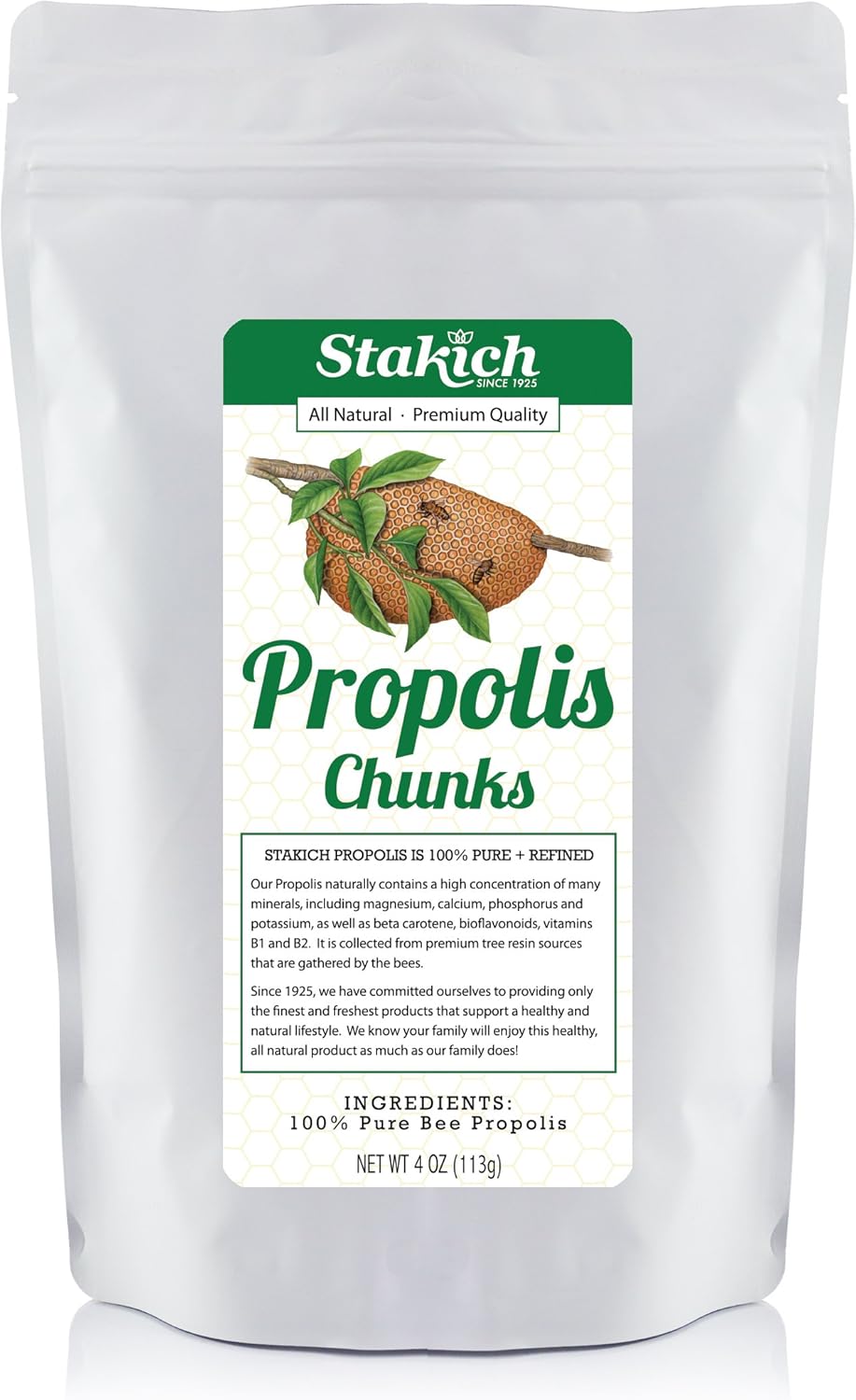
If you don't have enough propolis saved up from your own hives, raw chunks are the actual ingredient a tincture starts from — everything else (a jar, high-proof alcohol, cheesecloth) is kitchen equipment you likely already own, so there's no need to buy a bundled "kit."
Step 3: Steep in Alcohol
Place your ground propolis in a clean glass jar and cover it with high-proof alcohol—vodka (40% ABV) works fine, but 95% ethanol or grain alcohol extracts more efficiently if you can source it. Use a ratio of roughly 1 part propolis to 5 parts alcohol by volume; if you have 1 tablespoon of propolis, use about 5 tablespoons of alcohol. Stir well, cap the jar tightly, and store it in a cool, dark place.
Let it steep for 2–4 weeks, shaking the jar every few days to keep the propolis in contact with the alcohol. You’ll notice the liquid gradually turning dark brown or amber. After 2 weeks you can strain it and use it, but longer steeping (up to a month) produces a stronger extract. There’s no hard deadline—it won’t spoil. Taste and smell are your guides: a stronger propolis smell and deeper color mean a more potent tincture.
Step 4: Strain and Store
Line a fine-mesh strainer with cheesecloth or a coffee filter and pour the tincture through it into a clean jar, catching the liquid and discarding the spent propolis solids. If you want a clearer tincture, strain it again through fresh cheesecloth or a fine filter. The first strain is usually clear enough for most purposes.
Pour the finished tincture into dark glass bottles or amber dropper bottles—dark glass protects it from light degradation. Label it with the date and source (your hive). Stored in a cool, dark cabinet away from heat and direct sunlight, propolis tincture remains stable for an extended period, though higher-proof alcohol generally supports better preservation.